Tuesday, January 12, 2010
Just for fun: Octopus edition
Julian Finn and Mark Norman have observed this behavior in veined octopuses.
There's been quite a lot of discussion about whether this constitutes tool use. What do you think?


Bornaviruses in the genome
A major source of the genetic variability in species is due to viruses. Some viruses can insert their genetic information into the DNA of their host cells, a process known as endogenization. If this insertion occurs in a germ cell (giving rise to eggs or sperm) then all subsequent generations will contain that virus.
Think this is a rare event? About 8% of the human genome appears to have originated from viruses. Many of these viral insertions must have predated our separation from the other apes, as modern chimpanzees have viruses in the exact same positions in their genomes.
Until now, scientists had thought that the only group of viruses that could integrate itself in this manner were retroviruses. These viruses have an RNA genome. They carry encode an enzyme called reverse transcriptase that transcribes that RNA into DNA, which is then incorporated into the host genome.
Now Keizo Tomonaga and his team at Osaka University in Japan have discovered that bornavirus (BDV) are also capable of integrating themselves. Although BDV contains an RNA genome, it is not normally reverse transcribed into DNA. Nevertheless, endogenous Borna-like N (EBLN) elements were found in a variety of mammals, including humans. In addition, the researchers were able to show that BDV is still capable of inserting itself into the genome of human cultured cells.
For those who are interested, this topic has been covered in more depth by the blog Not Exactly Rocket Science.
Monday, January 11, 2010
Update: Common bacteria can turn mechanical gears.
On a previous post, I discussed how bacteria were able to turn tiny gears. Here's a video example, courtesy of Futurity.
Asexual Ants

A team of Texan and Brazilian researchers led by Christian Rabeling and Ulrich Mueller have confirmed that fungus-farming Mycocepurus smithii ants reproduce without the benefit of males.
Organisms that lack sexual reproduction can reproduce in a couple of ways. Single celled organisms such as bacteria can split evenly into two daughter cells. Multicellular organisms such as hydras can have offspring by budding. Finally, in some species, embryos can develop without the benefit of fertilization. This process is called parthenogenesis. A surprising example of this occurred in 2001 when a female bonnethead shark gave birth in a Nebraska aquarium after not having had the company of any males.
It can be difficult to determine whether true parthenogenesis has occurred, given the proclivity within some species for the female to store sperm for long periods of time. The scientists in this case dissected the sperm storage organs of reproducing ant queens, and found them to be empty. They also subjected the ants to various stresses (insert footage of lab-coated scientists yelling insults at ants) to see if that induced the queens to produce males. It never did.
Photo of Mycocepurus smithii by Erin Prado 6/22/2009 © AntWeb.org,
Sunday, January 10, 2010
Airbags for skiers
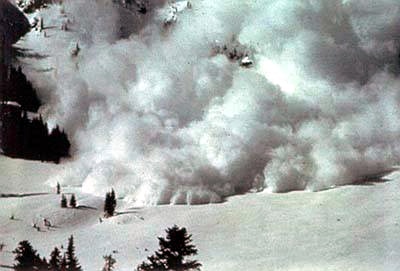
Bernhard Budaker of the Fraunhofer Institute for Manufacturing Engineering and Automation IPA and his team have developed a remotely controlled airbag system for skiers.
About 25 skiers are killed in the US each year by avalanches. An equal number are killed in Switzerland, and other countries, including seven killed over the past week. Often, people are not killed by the immediate impact, but rather as a consequence of being buried in snow. They may suffocate as carbon dioxide levels build up around them, or they may succumb to hypothermia.
A variety of survival equipment has been tried over the years, including beacons, probes, shovels, a device called an ‘Avalung’ (designed to delay suffocation until help can arrive), and yes, airbags.
Avalanche airbags are not a new idea, having been in use for several decades. They give a skier buoyancy to help him stay above the snow during an avalanche. However, in the past, the wearer has had to activate them himself. This means that if a skier is caught off guard, he might not have time to activate his airbags. In contrast, the new airbag is designed to be remotely activated by other members of a ski party or by ski instructors. The engineers say that the old airbags can be retrofitted with the new activation system.

The reason I like this story isn't only because it may save lives. The truth is that I can’t help envisioning skiers being remotely triggered at inopportune moments by their buddies. OK, I’m the bad guy.
Avalanche airbag system with visible airbags, taken by Nolispanmo, 2/21/2009.
Saturday, January 9, 2010
We see things differently with hands
This study falls under the category of studies I hope I never have a chance to volunteer for.
Researchers Tamar R. Makin, Meytal Wilf, Ehud Zohary and Isabella Schwartz have found that having hands affects visuospatial perception. Yes, you read that right.
Visuospatial perception is simply the ability to place objects in space. It’s the sense we use to judge distances and orient ourselves and parts of our bodies in space.
Volunteers with either right or left hands amputations were shown a cross in the center of a screen. White squares were briefly shown on either side of the cross, and the subjects were asked which white square was closer to the central cross.
People missing their left hands routinely thought the left square was closer to the center than it actually was. Conversely, people with right hand amputations underestimated the distance to the right square.
Aside from being a fascinating look at brain function, the researchers hope that this new finding will have implications in treating spatial hemineglect, a condition in which patients cannot perceive objects on one side. Hemineglect is caused by a specific brain injury but is often associated with a hand injury.
Friday, January 8, 2010
Matter/anti-matter explosion observed

University of Notre Dame astronomer Peter Garnavich and his colleagues have discovered a matter/anti-matter explosion. The exploding star, Y-155, was one of many found by the Essence project (Equation of State: SupErNovae trace Cosmic Expansion), a search for supernovae. The rest, being ordinary supernovae, paled in comparison.
Stars that are larger than 8 times the size of our sun will eventually either collapse into a supernova or a black hole. However, there seems to be a sweet spot for objects 150 to 300 times the mass of the sun where anti-matter particles can be formed. These stars can then blow up spectacularly. Y-155 was about 200 times the mass of the sun, the perfect size for a runaway anti-matter explosion.
Y-155 actually exploded 7 billion years ago. Because of the enormous distances involved (we are just now seeing the light from that explosion), the explosion appears quite faint. As Garnavich puts it:
“In our images, Y-155 appeared a million times fainter than the unaided human eye can detect, but that is because of its enormous distance. If Y-155 had exploded in the Milky Way it would have knocked our socks off.”
Such matter/anti-matter explosions were first hypothesized 40 years ago, but have only recently been observed.
A supernova, as seen by the Hubble telescope.
Subscribe to:
Posts (Atom)