The slider on the bottom takes you from a coffee bean to a carbon atom. Fun for everyone.
Monday, January 18, 2010


Desirable objects are further than they appear.
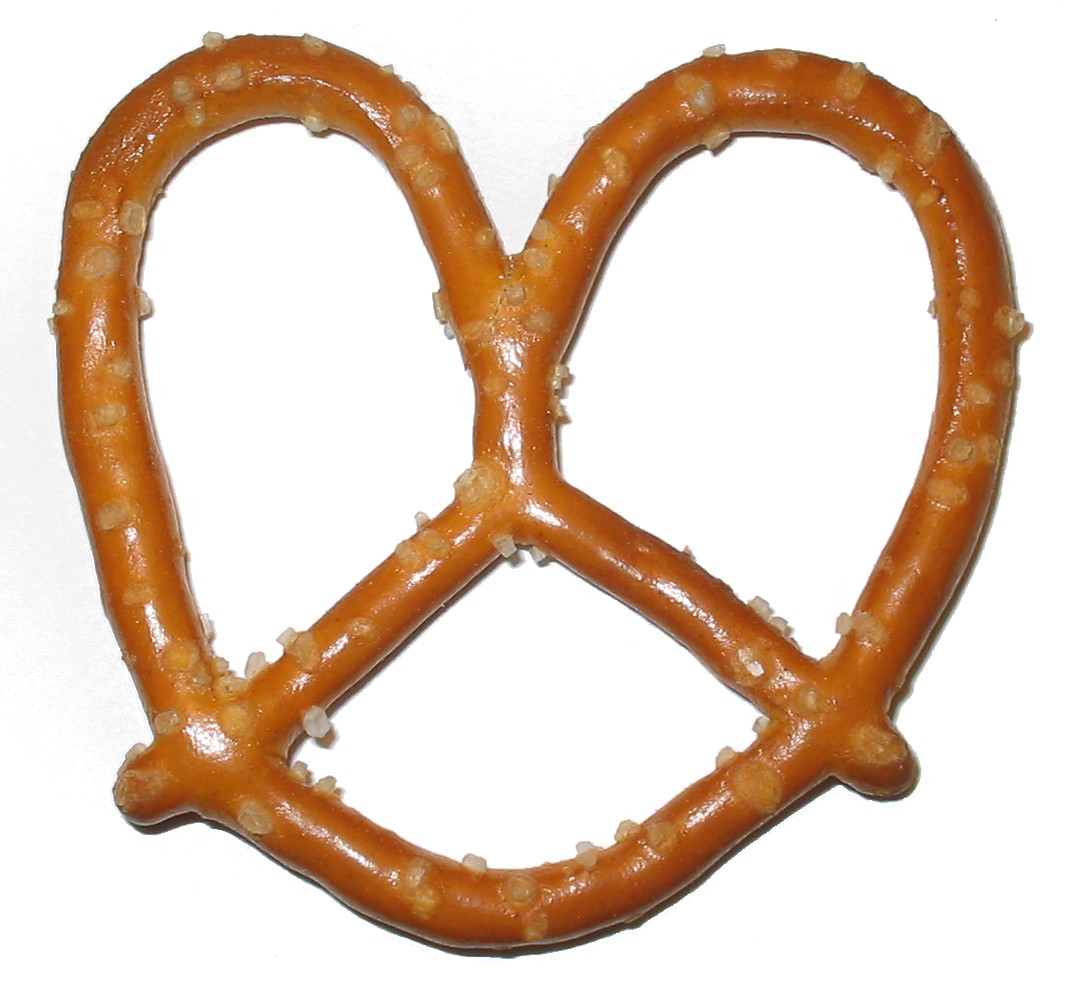
In five related sets of experiments, Emily Balcetis from New York University and David Dunning from Cornell University tested how desire affects perception.
In the first set of experiments, researchers asked volunteers (half of whom had been eating salty pretzels) to estimate the distance to a water bottle. As a group, the thirstier subjects all thought the water was closer than did their unsalted counterparts.
In another set of experiments, volunteers were asked to toss a beanbag onto a gift card that was worth either $0 or $25. They threw the beanbag much farther if the card wasn’t worth anything. The $25 cards seemed to be closer.
Sunday, January 17, 2010
Caffeine OK for tinnitus sufferers

It is a commonly held assumption that caffeine makes tinnitus worse. Lindsay St. Claire of the University of Bristol set out to test this hypothesis.
Sixty-six tinnitus-suffering volunteers who normally consume at least 150 mg per day of caffeine took place in a thirty-day trial. They were divided into two groups. One group consumed their usual amount of caffeine for 15 days, was weaned off caffeine over three days, and then had no caffeine for the remaining time. The second group was weaned off caffeine over the first three days, spent the next 11 days without caffeine, and then was brought back to their normal levels. Neither group ever knew whether or not they were receiving caffeine that day.
The volunteers recorded their tinnitus experiences throughout the month. The conclusion of the study was that tinnitus severity was not affected by caffeine consumption.Saturday, January 16, 2010
Wasp genome sequenced
The genomes of three species of parasitic wasp, all from the genus Nasonia, have been sequenced. John Werren of the University of Rochester was one of the team leaders of the international consortium of scientists who achieved this multiyear project.
Why is this finding significant?
Parasitic wasps are major predators of insects. There are 600,000 different species of parasitic wasp, each of which has a specific preferred prey. Being able to raise wasps could be a huge boon to agriculturalists and environmentalists who prefer to limit pesticide usage. In addition, the venoms employed by these tiny creatures (Nasonia or 'jewel' wasps are no more than 2 mm long) could prove to have a range of pharmaceutical uses.
The value of this data goes far beyond simply using the wasps for pest control. Now that we have its entire genome sequenced, Nasonia may be an even more valuable animal model than that gold standard of insects models, Drosophila melanogaster (the fruit fly).

For another, unlike flies, the male wasps have only a single set of chromosomes. This makes genetic analysis much simpler. In diploid organisms such as ourselves, you may need to alter both copies of a gene to see any differences. With only one copy of each gene, the effects of a single change can be immediately visible.
Also unlike flies but like humans, wasps use methylation to regulate their genes. It is becoming increasing evident that methylation plays a major role in development and regulation.
Another advantage is that the different species of wasp can crossbreed with each other. Researchers can use this ability to finesse out the causes of speciation. A major controversy in evolutionary biology is whether regulatory changes (changes in non-coding regions) or protein changes (alterations in the coding portions of genes) are more often responsible for differences between species. The first experiments to test this are already underway. For example,
One last point of interest to come from this data: Werren and his colleagues found bacterial and viral genes in Nasonia.
Werren says:
“We don’t yet know what these genes are doing in Nasonia, but the acquisition of genes from bacteria and viruses could be an important mechanism for evolutionary innovation in animals, and this is a striking potential example.”
Image of female Nasonia vitripennis (one of the three sequenced species) by M.E.Clark.
Friday, January 15, 2010
Should you water your lawn during the day?
Have you ever heard that you should not water your lawn during the heat of the day because it will scorch the grass? In a move straight out of Mythbusters, Gabor Horvath, from Hungary's Eotvos University set out to test this.
 He and his team found that water droplets sitting directly on smooth leaves had no effect. However, if the leaf had tiny hairs, the droplet could be held above the leaf by the hairs. In that case, the water droplet acted like a lens, focusing the sun’s rays and causing leaf burn.
What does this say about watering lawns? I went out with a low powered microscope to examine the grass on my own lawn. None of the grass blades I examined had any visible plant hairs, but some interspersed clover leaves were covered in them. Depending on the makeup of your lawn, you might well be better off to avoid watering it during the heat of the day.
Thursday, January 14, 2010
Photosynthetic Slugs
Animals that contain photosynthesizing algae within their bodies are by no means new to science. Perhaps the best known of these are the corals. The slug Elysia chlorotica is entirely different from those examples because rather than incorporating living algae into its tissues, it digests the algae and incorporates only the chloroplasts. Throughout its lifetime, it maintains the photosynthetic machinery within the chloroplasts in working order. Moreover, once the slug has eaten a healthy dose of chloroplasts, it never has to eat again. From then on, it can satisfy its energy needs by sunbathing.
One aspect of this that had puzzled scientists is that chloroplasts don’t last indefinitely. They must be re-supplied with chlorophyll and other compounds that are encoded in the algal nuclei. How were the slugs able to overcome this problem?
Mary Rumpho of the University of Maine sequenced DNA from the chloroplasts, confirming that the plastids did not contain the genes necessary to maintain themselves. She then looked at the slug’s genome and found that it contains at least one algal gene, and that this gene is present in the slug’s germline cells. In other words, although it is not clear how the slug got this gene (and suggestions have included viral transmission), it appears to be there to stay.
Not only is the gene present, but it is also active. Sidney K. Pierce of the University of South Florida in Tampa used a radioactive tracer to confirm that the slugs were in fact making their own chlorophyll.
Although gene transmission is common between types of bacteria, this could be the first case of horizontal gene transfer between plants and animals, a revolutionary finding.
Wednesday, January 13, 2010
Asteroid Does Not Hit Earth
An asteroid did not hit the Earth today.
An object known as 2010 AL30 was discovered by NASA on Monday. Today at 7:47 a.m. ET, it passed (will pass for those of you who were up early) by us with 80,000 miles to spare.
However, being only 10 meters across, it would have posed little danger even if it were to hit us. Most likely, it would have disintegrated in the atmosphere.
There is some possibility that 2010 AL30 is a manmade object, perhaps a spent rocket booster, or some other kind of space junk. However, the trajectory of the object suggests that it is indeed a naturally occurring asteroid.
For an idea of how close a miss this is, look here. The Earth is at one end, the moon at the other, and the yellow arrow indicates where 2010 AL30 passed by. Click to enlarge.

Subscribe to:
Posts (Atom)