Thursday, February 4, 2010
Blocking a frown may block bad feelings
Wednesday, February 3, 2010
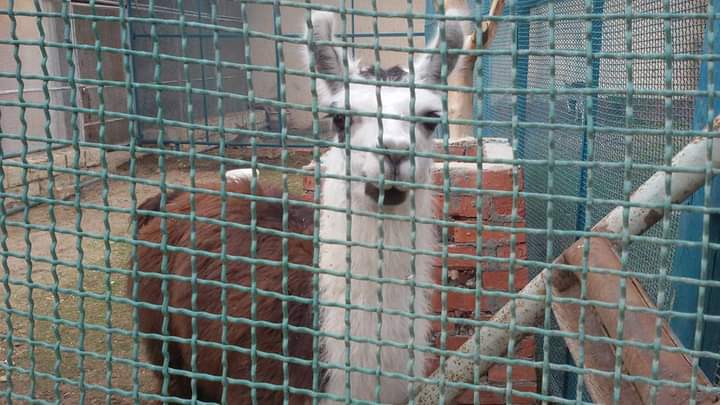
Llamas to the rescue
Tuesday, February 2, 2010
Just for fun: Neutrophil Chasing a Bacterium
Could people walk up walls?
Paul Steen of Cornell University and his former postdoctoral associate Michael Vogel have invented a powerful reversible adhesion system. Their work will be published in the Proceedings of the National Academy of Sciences.
Monday, February 1, 2010
Do honeybees recognize people?
In a series of experiments published in the Journal of Experimental Biology, Martin Giurfa from the Université de Toulouse, France, tested whether bees could distinguish random arrangements of dots and dashes from arrangements in which two dots were positioned like eyes, and dashes or dots represented noses and mouths. The bees were rewarded with sugar snacks when they chose the correct answer. It turns out that the bees could distinguish between the patterns. Once the bees had learned that the face-like patterns of dots and dashes yielded the rewards, they could correctly identify similar face-like patterns that they had not specifically seen.
The bees’ talents go well past dots and dashes, however, as was shown by the next set of experiments. This time, the researchers used actual photographs of humans. The bees were trained to go to one or the other of a pair of similar male faces. Bees were close to 80% successful in distinguishing the two faces. The scientists then doctored the faces to remove either external features (hair and ears) or internal features (eyes, nose, mouth). The bees still scored over 60% in choosing the correct face. Surprisingly, they did better without the internal features than without the hair and ears. When the pictures were vertically scrambled (eyes on the bottom, forehead in the middle), the bees scored no better than chance.
Apparently, bees not only can distinguish face-like conformations of dots and dashes from randomly assorted dots and dashes, they can also differentiate between pictures of real human faces. Truly amazing when you consider the bee brain is only about one cubic millimeter in size.
Sunday, January 31, 2010
Handedness affects perception
In many languages, the word ‘right’ is often associated with positive and correct things, while ‘left’ can often mean inadequacy or wrongness. But do those associations hold true for both right and left-handed people? Daniel Casasanto of the Max Planck Institute for Psycholinguistics has conducted a series of experiments to test those perceptions.
In one experiment, volunteers were given a cartoon of a character standing between two empty boxes. They were told that this person goes to the zoo, and that he loves zebras and thinks they’re good, but hates pandas and thinks they’re bad (the order of the animals and their natures were switched around randomly). The volunteers were then asked, if the character wishes to place one animal in the good box, and the other in the bad box, where should he put them?
Right-handed people placed the animal described as ‘good’ on the right side of the page, but left-handed people placed it on the left. If these experiments were conducted on right-handers who had had their right hands restrained for a period of time, making them effectively left-handed, their tendency to assign the good animal to the left box increased five times.
In other experiments, subjects were asked to rate pairs of objects or people for traits like attractiveness, intelligence, honesty, or to decide which item they would buy or hire. Universally, right-handed people preferred the object on the right, whereas left-handed people gave higher marks to the object on the left.
Only 14% of the test subjects noticed any correlation between their choice and their handedness. These data show that our sensory-motor experiences can strongly but subconsciously influence our perceptions of the world.