Science-- there's something for everyone

Monday, June 28, 2010

Habitable planets not so habitable

Cosmologists have found hundreds of extrasolar (outside of our solar system) planets. They’re still looking for ones that might be habitable and that might even host alien civilizations. New computer models developed by Rory Barnes of the University of Washington show that those planets may be even more rare than previously thought.

In order to sustain life, a planet must orbit its star in what’s termed the ‘habitable zone’, the zone at which liquid water is available. If a planet orbits a star alone, it’s likely to remain in a stable orbit with limited temperature fluctuations. The addition of other planets to the system, particularly gas giants such as Jupiter, could give those smaller rocky planets extremely elliptical orbits. Such a planet might spend part of every thousand years in the habitable zone, and the rest in a region of space where all water either boils away or freezes solid.

While this doesn’t preclude the possibility of finding life on such planets, it does pretty much rule out intelligent life, let alone civilization, which wouldn’t have had enough time to evolve. To be clear, this new model simply shows that if we find what appears to be a habitable planet, it might not have been in the habitable zone just a few centuries earlier. It doesn’t mean that there can’t be long-term life-sustaining planets just like Earth out there somewhere. In the meantime, astronomers will continue to search.


Sunday, June 27, 2010

Detecting Mad Cow Disease by a look in the eye

Mad Cow Disease (bovine spongiform encephalopathy) is a fatal disease that can infect humans who consume beef. For this reason, it’s critical to identify the cows that suffer from this disease before they are sent to market. So far, Jacob Petrich and his colleagues from Iowa State and the University of Pittsburgh have found a test that seems to work in sheep.

The researchers used fluorescence spectroscopy to examine the eyes of sheep suffering from a similar transmissible spongiform encephalopathy known as ‘scrapie’. The infected sheep’s eyes emitted a specific glow that was not visible in uninfected sheep retinas. This quick, noninvasive test would be of tremendous use to the meat industry, especially if it also works in cattle. The meat supply would be that much safer for all of us.

Photo by George Gastin, April 23, 2009.

Saturday, June 26, 2010

Coffee may not be as stimulating as you think

Everyone knows that if you feel tired, a cup of coffee will pick you up. Or will it? In one recent test, Peter Rogers and his colleagues from the Universities of Bristol, Münster, and Würzburg and from Imperial College London have determined that, contrary to popular opinion, caffeine does not increase alertness.

379 people who had abstained from caffeine for 16 hours were given either a placebo or caffeine. About half of the participants ranked themselves as non/low caffeine users, the other half as medium/high users. They were all questioned about perceived levels of alertness, headache and anxiety both before and after being given their unknown nostrum. In addition, they were physically tested for levels of alertness.

Although the medium/high users reported increased headache and dullness with placebo as compared to with caffeine, their tested level of alertness on caffeine was similar to that of the non/low users on placebo. In other words, the caffeine users were only as alert with caffeine as the nonusers were without it.

The authors interpret this result as meaning that the medium/high caffeine users had been suffering from caffeine withdrawal, and that adding caffeine back after the 16 hour caffeine fast merely brought their alertness levels back up to normal. The nonusers, having suffered no caffeine withdrawal, maintained the same alertness level with or without caffeine.

If these results are true, this implies that people get no benefit beyond placebo when they first start using caffeine as a stimulant, but that they subsequently require caffeine to prevent withdrawal symptoms. Anecdotally, I never found my caffeine consuming friends to be any more alert than my non-caffeine using self.

Friday, June 25, 2010

Life on Mars not impossible

Could life exist on Mars? Now that researchers have discovered bacteria in regions of Earth that are more inhospitable than Mars, that possibility becomes more likely.

The Lost Hammer Spring on Axel Heiberg Island, in the extreme north of Canada, is about as inhospitable as you can get. The water in the spring is so salty that it doesn’t freeze even at the -50ºC often experienced in the area. While the water contains no detectable oxygen, it does have large bubbles of methane emanating from it. Lyle Whyte and his colleagues from McGill University, the University of Toronto and the SETI institute, discovered some unique methane-eating anaerobic bacteria in the salty frigid waters.

While Mars does not resemble Earth in great detail, it does have both methane and frozen water. In places, the temperature even reaches a balmy -10ºC or higher. So who knows? Exobiologists are continuing to search for life there.


Thursday, June 24, 2010

Just for fun: Animal Origami


Brian Chan has created some incredible origami creatures.

Here's just one example, a grasshopper. But really, do yourself a favor and check them all out.

Flying Grasshopper--folded from an uncut square, 25" x 25"
Designed by Brian Chan, August, 2006

Hat tip: Melinda Muscato.


Wednesday, June 23, 2010

Strengthen your hips to prevent runners’ knee

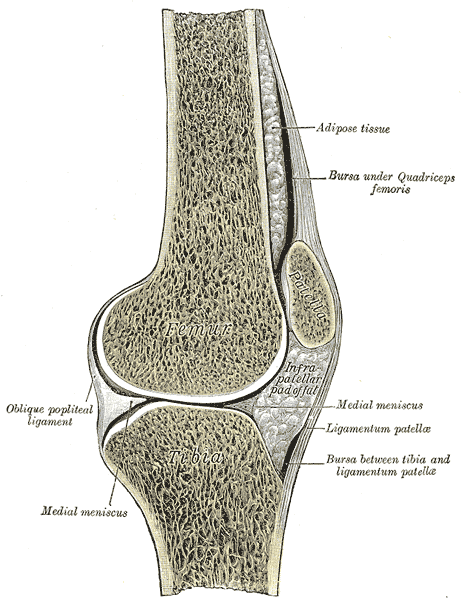
Knee pain, or more specifically, patellofemoral pain (PFP), is one of the most common injuries incurred by female runners. Tracy Dierks and his colleagues at Indiana University-Purdue University Indianapolis have hit upon one possible treatment: a series of exercises designed to strengthen runners’ hips.

Typically, a PFP sufferer begins to feel knee pain a little while into her run. The pain gets progressively worse until the athlete stops running, at which point the knee pain stops almost instantly. Like with osteoarthritis, the cartilage between the thighbone and the kneecap appears to be wearing away. Previous research on PFP had focused on hip problems as possible causes for the degradation. Dierks and his team decided to test whether specific hip exercises could treat the ailment.

The scientists took a small sample of female runners. Hip strength measurements were taken at the onset of the study. For the next six weeks, the runners were given twice-weekly hip strengthening exercises, at which point hip strength measurements were repeated. Women who had begun the study feeling intense knee pain whenever they ran on a treadmill, completed the study six weeks later with little or no knee pain.

Dierks plans to run further tests to both confirm his theory about the connection between hip strength and PFP, and to improve the exercise treatment regiment, which at this point consists mainly of single-leg squats and resistance band exercises.

Tuesday, June 22, 2010

Synthetic growth medium for stem cells

I’ve written before about some exciting work being done with human stem cells. In order to use the cells, scientists have to be able to reliably grow them under consistent conditions. To that end, Joerg Lahann, Gary Smith and their colleagues at the University of Michigan have developed a synthetic Petri dish coating.

In the past, human stem cells have been grown on a support matrix of mouse cells or mouse cell products such as Matrigel (a protein mixture made from mouse tumors). While these products adequately nourish the stem cells, they also secrete factors of their own which can have unpredictable consequences. For this reason, human stem cell lines grown using mouse products have strict therapeutic limitations.

After testing six different polymer coatings, the researchers hit upon a fully synthetic coating that was both stable and identical from batch to batch. They gave their new coating the acronym PMEDSAH. This stands for poly[2-(methacryloyloxy)ethyldimethyl(3-sulfopropyl)ammonium hydroxide], in case you were wondering. But don’t try to make it yourself, because they’ve got a patent pending.

PMEDSAH allows human stem cells to grow and, more importantly, to differentiate normally. After all, it’s the pluripotency of stem cells (their ability to become any type of cell) that makes them so useful.