Science-- there's something for everyone

Wednesday, March 23, 2011

Using microspheres to see smaller than ever


Zengbo Wang from the University of Manchester and his colleagues from that university and from the University of Singapore have extended the range of optical microscopes by at least twenty fold. To do so, they make use of transparent structures called microspheres, creating what they call a ‘microsphere nanoscope’.

Traditional optical microscopes cannot be used to discriminate objects less than one micrometer (a thousandth of a millimeter) apart. By adding the microspheres, that limit has been dropped to 50 nanometers (millionths of a millimeter). The ability of the tiny spheres to amplify images is theoretically limitless, possibly allowing researchers to watch viruses (which are typically measured in nanometers) in action.


Schematic of the transmission mode microsphere superlens integrated with a classical optical microscope. The spheres collect the near-field object information and form virtual images that can be captured by the conventional lens.

DOI: 10.1038/ncomms1211


Tuesday, March 22, 2011

New zombie ant fungi


The South American rainforests contain fungi that enslave and kill ants. Thanks to the work of Harry Evans and Simon Elliot of Federal University of Viçosa, and of David Hughes from Penn State University, we can add four new species of parasitic fungi to the pantheon.

These four new subspecies of fungi, which fall within the genus Ophiocordyceps, prey on different species of carpenter ant. In each case, upon infection the fungus takes over the ant’s brain, forcing the ant to attach itself to a suitable location for spore dispersal. It is the manipulation of the ant’s behavior that earns these fungi the name ‘Zombie ant fungus’. After the ant is placed to the fungus’ satisfaction, one or more fruiting bodies grow out of the ant’s head. These stalks serve to disperse new spores that can continue the fungi’s life cycle.

And now we have four more kinds of these little parasites. Here’s some footage of this kind of fungi narrated by David Attenborough, though if you’re squeamish, you may not wish to watch.


Monday, March 21, 2011

No need to stretch before running

Contrary to popular wisdom, stretching before a run does not minimize the risk of injury. So says a new study presented by Daniel Pereles of Montgomery Orthopedics at the 2011 Annual Meeting of the American Academy of Orthopaedic Surgeons (AAOS).

Almost 3000 healthy volunteers over the age of 13 who ran at least ten miles/week were divided into stretching and non-stretching groups. For three months, the runners in the stretching group followed a prescribed 3 to 5 minute stretching routine before each run. The runners in the non-stretching group did not stretch at all but simply started running. Any injury that prevented running for at least a week was recorded by self-evaluation.

About half the initial participants (1,398) completed the three-month regiment. These were divided into 600 stretchers and 798 non-stretchers. The injury rate was identical in both groups, at 16% of runners. In other words, for most people, stretching neither prevents nor causes injury.

In fact, the leading causes of running-related injuries are having had an injury within the previous four months and having a high body mass index. However, there was one subset of people for whom not stretching was problematic: the runners in the not-stretching group who normally did stretch. Those who changed their pre-run regiment from stretching to not stretching increased their injury rate by 40%.

What I get out of this is that if you are a runner and haven’t been stretching before each run, don’t start now. As a friend of mine once pointed out, it’s not as if our ancestors did a few calisthenics before chasing down that antelope. On the other hand, if you have been stretching, you’d better keep it up.


Sunday, March 20, 2011

Computers that understand facial expressions


Lijun Yin of Binghamton University is attempting to make computers understand facial expressions. Although, this might make computers easier for everyone to use, he especially sees a need for this technology among those who have a limited ability to communicate.


Caption: Binghamton University researcher, Lijun Yin, wants computers to understand inputs from humans that go beyond the traditional keyboard and mouse.

Credit: Jonathan Cohen

Earlier, Yin collaborated with Peter Gerhardstein, also from Binghamton University, to create a 3D facial expression library. That database, made from 2500 facial expressions of 100 different people, is available for free to nonprofit research groups. Since then, Yin has been attempting to teach computers to read those same emotional cues. The challenge is to translate tiny changes around a subject’s eyes or mouth into a language that computers can interpret.

As Yin says:

Computers only understand zeroes and ones. Everything is about patterns. We want to find out how to recognize each emotion using only the most important features.

If successful, Yin anticipates a myriad uses for the new technology, from determining whether patients are in pain to detecting lies. Perhaps one day, our computers will read our moods and start us off with some soothing music before they display our credit card bills.

You can watch Yin explain his project below.


Saturday, March 19, 2011

GABA influences motor learning

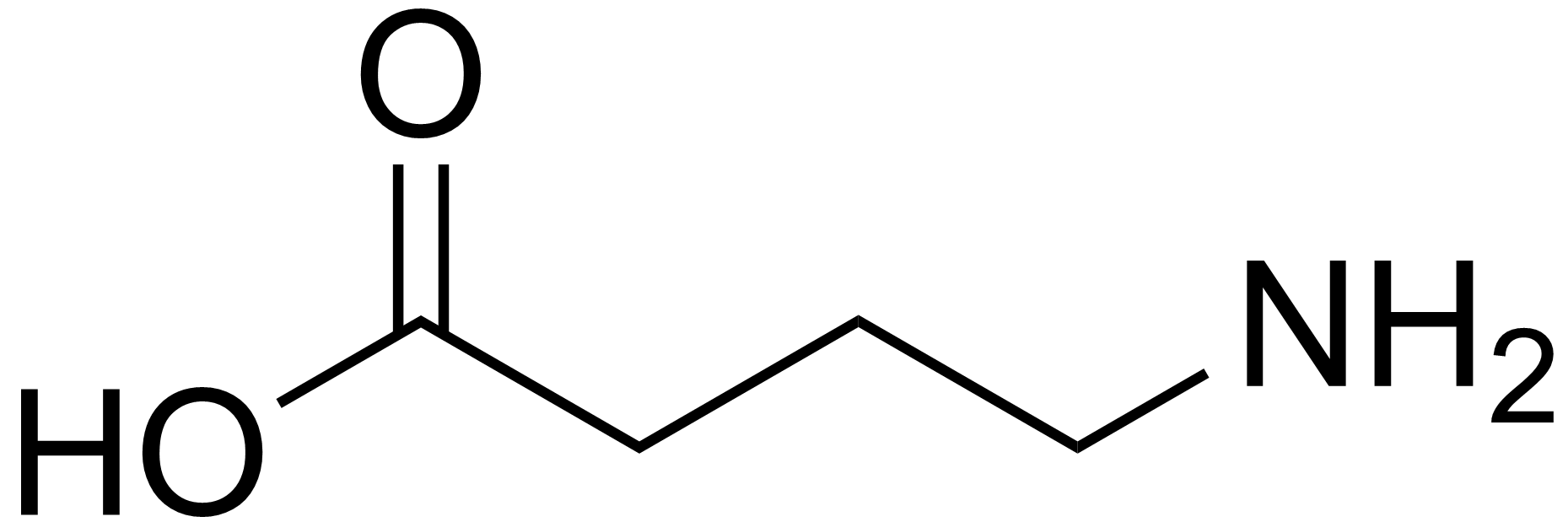
How come my daughter picks up the newest tae kwan do moves in a matter of minutes, and I’m still struggling with them months later? According to Charlotte Stagg and her team from the University of Oxford, the answer may lie in our responsiveness to GABA.

GABA (gamma-Aminobutyric acid), pictured above, is a neurotransmitter. Although structurally an amino acid, it is not incorporated into proteins but instead acts to regulate neural activity and muscle tone. Stagg and her colleagues wondered whether differences in responsiveness to GABA might affect motor learning as well.

To that end, the scientists measured GABA levels in volunteers both before and after those levels were decreased artificially by anodal transcranial direct current stimulation (low level current applied to their scalps). These magnetic resonance spectroscopy scans gave the researchers information about baseline GABA levels and GABA responsiveness in the participants. On a different day, the same volunteers were again scanned for GABA levels, this time while attempting to memorize and execute a sequence of finger motions. Those who had been more responsive to GABA learned the motions more quickly.

The scientists hypothesize that GABA responsiveness may affect one’s ability to make the neural connections necessary for learning and memory. In that case, controlling GABA levels may result in a potential treatment for brain trauma.

Friday, March 18, 2011

Just for fun: Super Moon


On March 19th, we'll be treated (weather permitting) to a view of the
largest full moon since 1993. The Moon's orbit around the Earth is slightly elliptical, rather than circular, meaning that at some times the Moon is closer to the Earth than at others. The closest approaches (at perigee) make the moon appear 14% larger than at its farthest (apogee).

See NASA's explanation here:


Thursday, March 17, 2011

Education is good for your health

A thirty-year study of almost 4000 participants in the Framingham Offspring Study showed a clear, though small, correlation between amount of education and systolic blood pressure. According to a study led by Eric Loucks of Brown University, those with the most education had slightly lower blood pressure than those with the least.

When Loucks and his colleagues looked at people of similar age, completing graduate school compared with not finishing high school gave women a 2.86 mmHg advantage and men a 1.25mmHg advantage. Next, the researchers examined the records of individuals who had all started with the same blood pressure thirty years ago, and checked to see how their blood pressure changed over time. Women who went on to complete graduate school during the intervening thirty years had 2.53 mmHg lower blood pressure than those who hadn’t finished high school. For men, the advantage was only 0.34 mmHg.

These differences are far too small to spell the difference between health and cardiovascular illness by themselves. However, it is also known that people with more than seventeen years of education tend to have a lower body mass index, and to smoke and drank less than people with less than twelve years of education. What I wonder is whether a person could get a similar benefit from a lifetime of independent curiosity and learning.