Science-- there's something for everyone

Wednesday, March 30, 2011

The fly family tree

Did you know there are about seventeen quadrillion flies on Earth? Neither did I. Apparently, there are some 200,000 species of true fly (insects with a single pair of wings, order Diptera). Thanks to the work of Brian Wiegmann of North Carolina State University and a large international team of entomologists and geneticists, we have a better picture of how all these flies are related to each other.

Flies have been around for 260 million years. Among other adaptations, during that time, twelve different groups of flies have taken to feeding on blood, and eighteen types of flies have lost their wings. They’ve evolved the ability to live in an amazing variety of places, either as adults or as larvae. According to Wiegmann:

There are fly larvae that live in petroleum, in hot springs, in the gills of land crabs, on the dung of millipedes and within bee hives.

The researchers compared the mitochondrial and nuclear DNA of an assortment of flies to assemble an evolutionary tree for these flies. Many of the results were expected. Flies that had been grouped together by physical traits turned out to be genetically related as well. However, there was at least one major surprise. The fruit fly Drosophila, which may be the most common animal model in all of science, turned out to be most closely related to a couple of insect parasites, including a wingless fly that lives on honeybees. Who could have seen that coming?

Thanks to the painstaking work of collecting fly samples and sequencing their DNA, we now have an understanding of how flies evolved. This in turn, gives us a better understanding of evolution in general, always a plus.


Tuesday, March 29, 2011

Surprising keys to long life


Howard Friedman and Leslie Martin from the University of California, Riverside have been studying the factors that allow people to live long lives. The Longevity Project: Surprising Discoveries for Health and Long Life from the Landmark Eight-Decade Study is the result of their two decade long project.

Much of the data was first gathered by the late Louis Terman of Stanford University, who studied 1500 ten-year-old children, starting in 1921. Those children were followed over the decades, and extensive notes were taken on every aspect of their lives. When Friedman and Martin took over the project in 1991, they enlisted the help of graduate and undergraduate students to track down additional information about the Terman participants.

The results were somewhat startling. In particular, the researchers did not expect to see that the most cheerful, optimistic, happy kids had not lived as long as their more serious counterparts. Also, persistent hard-working people lived longer than more relaxed stress-free people.

You may or may not be surprised by some of the other findings:

  • Men in long-term marriages lived the longest, followed by those who never married, and trailed by those who had been divorced. Women’s longevity was not greatly affected by marriage or divorce.
  • Pets do not extend life expectancy, nor does feeling loved. On the other hand, helping others and participating in health-promoting groups does extend life expectancy.
  • Here’s one that really surprised me. According to the authors, starting formal education too early (first grade before age 6) is linked to earlier mortality.

Personally, I think this study was a bit small to make these kinds of sweeping statements. It does give one pause though. You can see Friedman and Martin discuss their project here:


Monday, March 28, 2011

Children don’t wake to fire alarms

Many parents sleep soundly knowing that their home smoke detectors will awaken them and their children in case of a fire. Unfortunately, that doesn’t seem to hold true for children. Dorothy Brock and Ian Thomas of Victoria University, Melbourne conducted a small study testing whether children will wake up to alarms. The chilling answer is that most will not.

The parents of 123 children aged 5 to 15 were asked to wait until the kids had been asleep for at least an hour and then set off the nearest smoke detector for 30 seconds. The parents then charted whether the kids woke up at all, and if they did, whether they understood why they had been awakened and what they should do (i.e. evacuate the house). Overall, 78% of the children slept right through the alarm. In the 5 to 10 age group, a whopping 87% slept through. Of the lighter sleepers who did wake up, less than half indicated that they knew they must leave the house.

If this data holds true, only about 10% of kids can be relied upon to respond to a smoke alarm by waking up and leaving the house. In this study, the alarms were only sounded for 30 seconds. In all likelihood, an ongoing claxon would eventually awaken more children. However, in a fire, those extra minutes can be extremely costly.

According to Bruck:

Parents should not rely on their children waking to the smoke alarm in the event of a fire and should not assume that they will immediately evacuate if they do wake up to a fire.


Sunday, March 27, 2011

Scarless surgery


Just as laparoscopy revolutionized surgery a few decades ago, now a new technique undergoing clinical trials is setting the stage for the surgery of the future. Natural Orifice Translumenal Endoscopic Surgery (NOTES) may very well be the wave of the future.

Unlike traditional surgeries, NOTES does not require any external incisions. Instead, as the name implies, surgeons make use of natural orifices, most often the mouth or vagina. Surgical instruments are threaded into the body and then internal incisions through either the vaginal wall or digestive tract place the implements where they are needed. Because the affected internal areas have few pain receptors, in sharp contrast to skin, patients require far less pain medication either during or after the procedures.

Thus far, doctors have successfully removed gall bladders, kidneys and appendixes, and repaired hernias via this method. The easiest orifice to use seems to be the vagina, which gives women an obvious advantage. However, the Natural Orifice Surgery Consortium for Assessment and Research (NOSCAR), formed in 2006, is conducting clinical trials in the hopes of bringing scarless surgery to everyone.


Saturday, March 26, 2011

We’re losing our nights


Light pollution has always been the bane of stargazers. A new study by Christopher Kbya and his team from the Institute for Space Sciences and the Leibniz-Institute shows just how pervasive this problem has become. According to them, on a cloudy day in Berlin the sky is ten times brighter than it would be without the anthropomorphic light sources.


Berlin at night

Photo: C Kyba.

Historically, astronomers have only measured the amount of light pollution on cloudless nights since they don’t tend to use their light telescopes on cloudy nights. And light pollution is a problem even on clear nights. However, as clouds serve to redirect light back in the direction from whence it came, the problem can be magnified many times on cloudy nights. This isn’t so much a problem for astronomers, again, they aren’t looking at the sky on cloudy nights anyway. It could be a huge problem for the plants and animals that rely on the absence of light to trigger their reproductive and behavioral cycles.

I should add that all the light measurements were taken on moonless nights, and yet the amount of light in the urban settings was comparable to that of a full moon in a rural setting. Many organisms have not only day/night cycles but also monthly rhythms that depend on the lunar stages, especially the times of full or new moons. Although the authors did not test this directly, it’s easy to assume that such creatures would be seriously disoriented by the light pollution coming from our cities.

If you want to help astronomers assess the amount of light pollution in your area, you can participate in the Globe at Night project. Phil Plait has more information about this on his Bad Astronomy blog.


Friday, March 25, 2011

Just for fun: Radiation Dose Chart


OK, maybe not that much fun, especially in light of recent events in Japan. Still, I found this chart by Randall Munroe very interesting.


Hat tip:
Bad Astronomy.

Thursday, March 24, 2011

Roundworms versus sepsis

Researchers from the Universities of Singapore, Liverpool, Glasgow and Strathclyde have come up with a potential treatment for sepsis. They found that a protein extracted from roundworms suppresses the catastrophic inflammation that often leads to death.

Sepsis, also called blood poisoning, can result from an unchecked infection that spreads through the bloodstream. The body reacts to this threat by undergoing a systemic inflammatory response. In up to half of all cases, the eventual prognosis is organ failure and death. There is a clear need for better treatments.

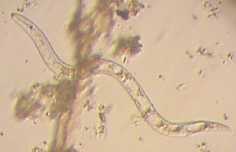
Enter the humble roundworm, Acanthocheilonema viteae, actually a parasitic nematode. These tiny creatures, barely visible to the naked eye, infect as many as a quarter of the world’s population. They also secrete a protein called ES-62 that is known to suppress inflammation. The ES-62 protein induces a process of autophagy (‘self-eating’) in which damaged cells and tissues are cleared from the body, preventing systemic inflammation and leaving healthy tissue.

This property is sometimes exploited by people suffering from allergies or autoimmune diseases, who willingly infect themselves with the little worms. Happily, the researchers, led by Alirio Melendez of the National University of Singapore, have found that the protein alone works just as well. The scientists induced sepsis in mice, and then successfully protected those mice from septic shock by administering ES-62.

Melendez anticipates using this protein to treat humans as well:

The findings suggest that ES-62 could be used to induce autophagy and reduce the overwhelming inflammation that is responsible for the massive tissue damage seen in sepsis.

Hopefully, further experiments will bear him out.