Science-- there's something for everyone

Thursday, April 28, 2011

Embryonic development through cell repulsion

Multicellular animals such as ourselves have a body plan consisting of distinct layers of cells. These germ cell layers are maintained as separate regions very early in embryonic development. New research by scientists from McGill University and from the University of Toronto has shed light on the process of differentiation and separation.

Our bodies are made up of three types of cells: ectoderm, mesoderm and endoderm. Broadly, ectoderm cells eventually make up the nervous system and skin; mesoderm cells become bone, muscle, and the blood system; and the endoderm develops into the gastrointestinal and respiratory tracts. Once the distinct layers are formed (at a time when the developing embryo is no more than a ball of cells), they remain separate for rest of the individual’s life.

Traditionally, it was thought that the three layers of cells remained separate due to differential attraction. It was proposed that endoderm cells, for example, had a higher affinity for other endoderm cells than for mesoderm or ectoderm cells. Thus, each type of cell would stick to its own kind in preference to other cell types. In this study, François Fagotto of McGill and Rudi Winklbauer of the University of Toronto took a closer look at developing frog embryos. They found that rather than simply adhering to their own types of cells, mesoderm and ectoderm cells were actively repelling each other.

Caption: These are frames from a high- resolution movie of live fluorescence confocal microscopy. The membranes (outlines) of ectoderm and mesoderm cells are labeled in green and orange, respectively. In the first frame, the two types of cells are in tight contact, and their membranes appear merged (green + orange = yellow). In frames 2 and 3, a repulsive reaction is triggered. While cells are being pulled away (arrows), adhesive contacts are ripped apart, leaving behind threads of membranes (arrowhead), just like when one tries to detach two objects that are glued together.

Credit: François Fagotto

Now it appears that both attraction and repulsion are important factors in embryo development.

Wednesday, April 27, 2011

What kind of food should we take to Mars?

This is actually a very difficult question. Besides being able to last for years without deteriorating or rotting, the food must be available in sufficient quantity to sustain the crew for that duration, and be palatable enough for the astronauts to choke down when they’re hungry.

Michele Perchonok from NASA Johnson Space Center and her colleagues have written a report detailing what kinds of foods a mission to Mars might take. Currently, each astronaut is provided with 3000 calories weighing 1.8 kg (food plus packaging) per day. That food is mostly ‘thermostabilized’ (heated to kill germs before packaging) or freeze-dried. Food scientists are continually fiddling with fat content and moisture levels in foods order to lower the weight of those items while preserving the number of calories. After all, any decrease in cargo weight also affects the weight of the fuel needed to lift that payload and lowers the cost of the whole mission.

Shelf life is another issue. Most foods that you see on supermarket shelves are not expected to last longer than two years (though some do). For a deep space mission, food might need to remain edible for at least five years without refrigeration. Therefore, NASA has been conducting shelf-life studies on a variety of foods. Of the 13 thermostabilized products they left out to rot, meat products fared the best and eggs the worst. They are also looking into the possibility of storing food outside the space craft, and using the cold vacuum of space to preserve the food.

Finally, the foods must be of sufficient variety and provide necessary nutrition for long missions, neither of which is easily accomplished.

I recently read Mary Roach’s book Packing for Mars: The Curious Science of Life in the Void, and it contains what is almost certainly more than you’d want to know about life in space. One of the sections deals with exactly this topic, how to stock a spacecraft’s pantry. One tip: use bite sized morsels. Any crumbs you create during your meal will float around you for the duration of your trip.

Astronauts on the International Space Station.


Tuesday, April 26, 2011

Keeping bed bugs away

Bed bug infestations are on the rise in many regions of the world. Not only are they becoming more and more prevalent but they are also increasingly resistant to common pesticides. Luckily, help may be on the way in form of a natural pheromone.

Pheromones are chemical signals that are passed through the air like smells. Bed bugs rely on these signals to communicate with one another about reproductive readiness and other social cues. Researchers from Lund University and from the Engineering and Mathematics Mid Sweden University have discovered that among the pheromones produced by bed bugs is an alarm signal that causes other bed bugs to flee the area. Even better, the signal appears to work well on both the common bed bug Cimex lectularius and on the more recently introduced tropical bed bug Cimex hemipterus.

Getting bed bugs to evacuate your bed is certainly desirable, but if you can’t get your hands on any 4-oxo-(E)-2-hexenal or 4-oxo-(E)-2-octenal (the nymph alarm pheromones) you may prefer the following tips to avoid bringing home an infestation in the first place, especially if you frequent hotel rooms.

  • In the hotel room, check for signs of bed bug infestation—exoskeletons or small blood stains. Not an easy task since bed bugs are no more than half a centimeter long. You’ll need to pull back the sheets and look along the seam lines of the mattress and box springs. You should also check around the headboard, particularly in screw holes or carved recesses.
  • Keep your suitcases off the carpet (some sites suggest keeping your luggage in the bathtub), and check them for infestation before returning home.
  • Put your laundry into plastic bags for immediate washing upon your return home.
  • At home, launder everything possible in hot water; vacuum out your suitcases and discard the vacuum bag in a sealed plastic bag.


Monday, April 25, 2011

Sequencing breast cancer


Matthew Ellis from the Washington University School of Medicine led a team of geneticists and oncologists in sequencing the entire genomes of 50 different breast cancer tumors. The new data will allow doctors to not only categorize types of breast cancer, but also perhaps to personalize treatment.

In order to specifically identify the gene changes that were unique to the cancers, the scientists compared the DNA in the tumors to the DNA of the same patients’ healthy cells. That way, exact genetic comparisons could be made between healthy tissue and cancerous tissue within each person. Considering that each genome was sequenced 30 times to ensure accuracy, the entire project required the sequencing of over 10 trillion base pairs.

In all there were over 1700 mutations in the tumor genomes, though many may not have been specifically related to the cancer. Only five mutations were each found in over 10% of the tumors, and one of them was present in 40% of the tumors (some tumors had more than one of these common mutations). Of course, a gene disruption that is only found in one woman out of 50 may still be responsible for thousands of cases of breast cancer in the general public, or may be more common in other types of cancer.

Only women with estrogen-receptor-positive breast cancer were recruited for this study. Although all were given estrogen-lowering drugs in an attempt to slow their tumor growth, only about half the women responded to this treatment. The scientists are hopeful that among other things, this study will help doctors figure out when to offer specific treatment regiments like estrogen suppression.

Caption: The above Circos plot is a visual representation of the genomic disruptions in one of the breast cancers studied.

Credit: Matthew J. Ellis, MD, PhD


Sunday, April 24, 2011

Cat allergy vaccine

Up to 10% of the population is allergic to cats. Mark Larché, the Canada Research Chair in Allergy & Immune Tolerance, and his colleagues have been working to help those people. In doing so, they not only created a cat allergy vaccine, but they are pioneering work on vaccines against other common allergens.

Allergic reactions result when patients’ immune systems attack innocuous substances, such as pollen or animal dander. Instead of ignoring such substances, the body produces a particular type of antibody called immunoglobulin E (IgE), which in turn leads to the release of the histamines and other chemicals that cause allergic symptoms.

Traditionally, there are two ways to treat cat allergies: avoiding cats, and getting allergen specific immunotherapy, a.k.a. allergy shots. Although the exact mechanism of how allergy shots work is not completely understood, it appears that repeated exposure to the allergens both desensitizes the immune system and increases the amount of a different type of antibody (IgG) which can outcompete IgE. Allergy shots can be highly effective, but they are also time consuming, expensive and uncomfortable. Most people must get shots as often as twice a week at first, and continue to get shots for several years.

Larché and his team chose a different approach. Rather than injecting patients with increasing doses of whole allergen, the researchers injected volunteers with synthetic peptides created from a cat protein that is known to be responsible for the majority of allergic symptoms. The peptide vaccine activated T-cells, and unlike allergen immunotherapy, did not stimulate the release of histamines. Nonetheless, the treatment resulted in insensitivity to cat allergen skin tests.

The required dosage to achieve effectiveness has yet to be worked out. Allergy sufferers will probably need multiple doses of the peptide vaccine to be symptom-free and it’s not clear how long the treatment will continue to work. On the plus side, peptide immunotherapy does not appear to cause the side affects associated with traditional immunotherapy (soreness and swelling at the injection site, or systemic reactions in severe cases). Whether the technique is also time and/or cost effective is yet to be determined.


Saturday, April 23, 2011

Just for fun: Chimp memory

Think humans have good memories? Watch Ayumu, a young male chimpanzee perform a seemingly impossible memory task. He has to touch the squares on the screen in the correct numerical order after having seen the numbers for only 210 milliseconds.


To be fair, other researchers have criticized this test, claiming that Ayumu had required extensive practice to achieve this result, and that human test subjects did as well or better with the same amount of practice.

If you want to try your own memory on this test, you can do so here.

Friday, April 22, 2011

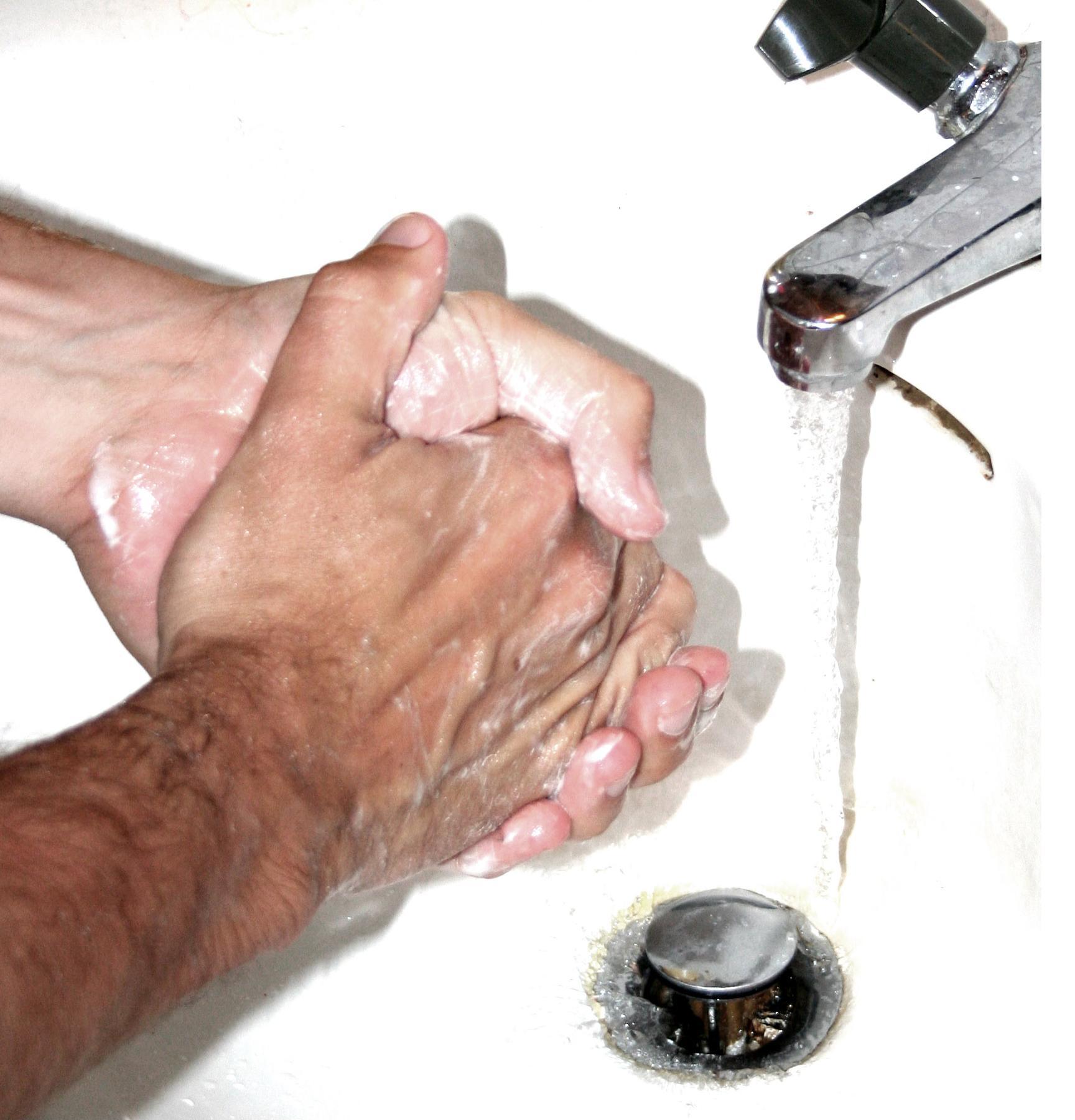
Hands-free faucets not so great

Johns Hopkins researchers led by Emily Sydnor took a closer look at the hands-free faucets in hospitals and didn’t like what they found. The automatic faucets were up to three times as likely to be contaminated with Legionella bacteria as manual faucets.

This is counterintuitive to say the least. After all, the whole point of the hands-free faucets was to prevent contamination. The researchers themselves are puzzled as to why the electronic-eye fixtures, which have been in hospitals for over a decade, are so problematic. One possible reason may be that the hands-free faucets have more complicated valve and electronic components that cannot be effectively disinfected. Many hospitals treat their water supply specifically to reduce the levels of Legionella and other harmful pathogens. Those methods don’t appear to work on the electronic faucets, which can apparently harbor harmful levels of bacteria.

The researchers have contacted the faucet manufacturers to see if modifications can be made to allow the hands-free devices to be more thoroughly sterilized. In the meantime, Johns Hopkins Hospital is replacing its automatic faucets with manual ones. Unfortunately, this means the hospital will have to go back to using four times as much water for hand washing.

By the way, Sydnor does not think the general public has anything to fear from non-touch faucets in public venues:

The levels of bacterial growth in the electronic faucets, particularly the Legionella spp., were of concern because they were beyond the tolerable thresholds determined by the hospital. Exposure to Legionella spp. is dangerous for chronically ill or immune compromised patients because it may cause pneumonia in these vulnerable patients. The levels we found of Legionella spp. were still within the level that is well tolerated by healthy individuals.