Science-- there's something for everyone

Sunday, July 3, 2011

RNA/DNA discrepancies


Vivian Cheung of the University of Pennsylvania and her colleagues from that school, the University of North Carolina and the Howard Hughes Medical Institute have found a large number of discrepancies between DNA sequences and their corresponding RNAs. These disparities could have implications for disease susceptibility and other factors of variability between people.

In the standard model of protein synthesis, the sequence of nucletotides in DNA is faithfully copied into RNA, which in turn is used to create the exact sequence of amino acids specified by that DNA. Apart from substituting U’s for T’s and some splicing, the RNA sequence is supposed to be virtually identical to the DNA template from which it was made. After all, our proteins are determined by our genes, aren’t they?

While this mechanism still holds true, the adherence between DNA sequence and protein structure isn’t as solid as once thought. It turns out that there are many discrepancies between RNA and DNA. In a sample of B cells from 27 people, Cheung and her colleagues found over 10,000 of these single nucleotide changes (RNA-DNA differences, or RDDs). 40% of the genes in the B cells had at least one RDD. RDDs were also found in skin and brain cells from both infants and adults. Interestingly, the RDDs did not appear to be random. Individuals who had an RDD at a specific location in one cell, such as a C where an A should have been according to the DNA sequence, had that same change to a C at the same place in all their cells.

Although there are enzymes (deaminases) that alter RNA sequences as compared to their DNA templates, these enzymes cannot account for nearly half of the RDDs discovered by the team. As of now, the mechanism behind those changes remains unknown.

These data bring into question just how much we can know about ourselves from sequencing our genomes. Thanks to the RDDs, two individuals with the same DNA sequence might very well end up with different proteins, and consequently, different health risks or physical or mental attributes.

Top: Comparison of a single-stranded RNA and a double-stranded DNA with their corresponding nucleotides.
By Sponk, 3/23/2010.

Saturday, July 2, 2011

Just for fun: Rube Goldberg Machines


Students from the University of Wisconsin-Stout won the 2011 National Rube Goldberg Machine championship. The theme this year was to water a plant, which the students accomplished in 135 steps.


Although not the contest winner, a team from Purdue University smashed the previous world record by constructing a Rube Goldberg machine with 244 steps. They watered their plant by way of recreating the history of life on Earth.


You can see another perspective of the Purdue entry with some explanation here.

By the way, the 2012 task will be to inflate a balloon.


Friday, July 1, 2011

Yo-yo dieting not so bad


Okay, don’t get me wrong.  Maintaining a healthy weight throughout one’s lifetime is obviously the ideal.  However, many people who try to lose weight end up regaining much or all of that weight back.  This cycling between low and high weights has been dubbed ‘yo-yo dieting’ and has been assumed to have detrimental health consequences, so much so that some people advocate remaining obese rather than yo-yoing.  Not so, according to Edward List of Ohio University, who presented a paper on the topic at the 93rd Annual Meeting of The Endocrine Society. 

List divided 30 mice into three groups, one fed a high fat diet, one a low fat diet, and the third cycled between four weeks of high fat feed and four weeks of low fat feed.  The mice were allowed to live out their normal lifespans.  I guess if you’re a lab mouse, this is the gig to get. 

Along the way, the mice were measured for weight, body fat and blood glucose levels. Although the yo-yoing mice had large fluctuations in health measures (depending on where they were in their cycles) overall, they had better outcomes than the high fat mice.  Not only were their lifetime average metabolic numbers better, but they lived almost 35% longer.  In fact, mice on the yo-yo diet lived as long as the low fat mice.

To be clear, this was only a small mouse study.  Still, the results do suggest that people who are trying to lose weight should not give up if they fail a few times and regain that weight.  Cycling through weight gains and losses may not be hurting them as much as not even trying to lose weight.   


Thursday, June 30, 2011

Paralyzed man is able to stand


Thanks to Reggie Edgerton of UCLA, Susan Harkema of the University of Louisville, and their colleagues from UCLA, Caltech, the University of Louisville, and various medical institutes, a paralyzed man is able to stand on his own feet. The 26 year-old Rob Summers, who had been paralyzed from the chest down after a hit-and-run car accident in 2006, can now stand without external support for up to 25 minutes at a time.
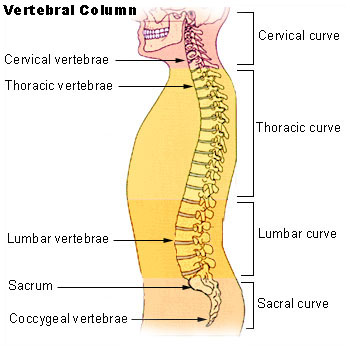
The doctors implanted a 16-electrode array on Summers’ dura (the outermost membrane around the spinal cord). Although the injury had been between the C7 and T1 vertebrae (see diagram left), the electrodes were implanted far lower, in the L1 to S1 region. After several weeks of training Summers was able to support his own weight during electrical stimulation. He was not only able to voluntarily move his limbs but even regained some bladder, bowel and temperature control, an unexpected bonus of the treatment.
This technique had been successfully tested in animals, but this was the first successful trial in a paralyzed human. The research team has received approval to try the epidural stimulation procedure on four more patients.
You can watch the researchers’ explanation below.


Wednesday, June 29, 2011

Milky Way is full of orphan planets


Until recently, astronomers have assumed that planets are only to be found obediently orbiting their stars. Not so, according to an international collaboration led by Hiroki Sumi of Osaka University. Apparently, not only are there planets roaming around the galaxy with no host star, but they may outnumber stars by two to one.

The astronomers used a technique called gravitational microlensing to find the wayward planets. Briefly, as a closer object (like a planet) passes in front of a distant bright star, the gravity of the closer object affects the light coming from the distant star. Thus far, ten Jupiter-sized rogue planets have been detected, but the scientists extrapolate that there may be as many as 400 billion star-less planets in our galaxy.


Artist's concept of a free-floating planet

This artist's conception illustrates a Jupiter-like planet alone in the dark of space, floating freely without a parent star. Astronomers recently uncovered evidence for 10 such lone worlds, thought to have been "booted," or ejected, from developing solar systems.
Image credit: NASA/JPL-Caltech.


Where did these homeless planets come from? If current theories about planetary formation are true, namely that planets form from the dust swirling around proto-stars, then these orphan planets must have been flung out of their stellar systems, perhaps due to collisions. On the other hand, there may be a completely different mechanism for planet formation that does not involve orbiting any stars.

To be clear, just because a planet does not orbit a star does not mean that it can wander aimlessly about the galaxy. Like the stars in the Milky Way, such planets would eventually fall into stable orbits around the center of the galaxy.

For more details, check out Phil Plait’s Bad Astronomy blog.

Tuesday, June 28, 2011

Bad news for sick space travelers


According to new research led by Jean-Pol Frippiat of Nancy-University (Vandœuvre-lès-Nancy, France), space travel may compromise antibody production. Apparently, zero gravity conditions can decrease the variability that makes antibodies so powerful.

Our immune systems rely heavily on the fast diversity of our antibodies to attack any foreign invader we might encounter. In addition to the variability that is built into the manufacture of antibodies (which can be put together in a great many combinations), antibody genes also mutate at extremely high rates. Now it seems that the hypermutation of antibody genes is decreased during extended periods at zero gravity.
The researchers compared three groups of the amphibians Pleurodeles waltl (known to produce antibodies the same way that humans do). One group of the newts was immunized on Earth, one in space, and one not at all. The space group showed a lower frequency of mutation than the Earth-bound group. This could mean that human space travelers will have a harder time fighting off infections.  On the other hand, astronauts will probably only have to contend with their own germs anyway, not new ones.


Monday, June 27, 2011

Early archosaur reclassified


A 250 million year old fossil that was thought to belong to a creature that lived before birds and crocodiles branched off from each other has now been found to belong securely to the crocodile branch of the tree, according to Sterling Nesbitt of the University of Washington and his colleagues Jun Liu of the American Museum of Natural History in New York and Chun Li of the Institute of Vertebrate Paleontology and Paleoanthropology in Beijing. The researchers examined the fossil remains of Xilousuchus sapingensis and found that it has more in common with crocodiles than with birds.

As you can see from the cladogram below, birds and reptiles shared a common ancestor.  Somewhat more surprisingly, this diagram also shows that crocodiles are more evolutionarily similar to birds than they are to lizards, and that birds form a subgroup within reptiles. Creatures within the entire group of reptiles, including birds, are classified as archosaurs.

File:Tuatara cladogram.svg
1. Tuatara
2. Lizards
3. Snakes
4. Crocodiles
5. Birds
By Benchill, Nov. 8, 2007

The most interesting thing about this reinterpretation of the X. sapingensis fossil, is that it places the crocodile/bird divide further back in history. The largest extinction in Earth’s history (in which 95% of marine life and 70% of land dwellers perished) occurred at the end of the Permian period 252 million years ago, or just before X. sapingensis lived. Does this mean that archosaurs had diverged into bird and crocodile lines before that extinction event, or afterwards?  If before, it means that each of the subgroups shown above had to have survived the extinction event.  If after, the subgroups would have had to have separated from each other within a few million years.  And thus, scientific debate goes on.


This is a reconstruction of X. sapingensis, based on the fossil.
Credit: Sterling Nesbitt