Science-- there's something for everyone

Sunday, December 18, 2011

How to heal a broken bone


Is it better to rest an injured limb completely or to begin using it as soon as possible?  According to a study by Robert Guldberg and his colleagues from the Georgia Institute of Technology, the answer is a little of both.  The best choice is to immobilize a broken bone for about four weeks, and then to start applying compressive forces to the injury.  At least, that’s the case for rats.

The scientists created gaps in rat limb bones and then seeded those gaps with a potent bone growth factor (human bone morphogenetic protein-2).  All the rats had plates screwed onto their injured legs to protect them from mechanical forces.  Some of those plates were rigid, whereas others had a release mechanism that allowed the bone to be compressed. 

Rats whose broken bones were immediately subjected to compressive loads did not heal very well.  The mechanical forces applied at the very beginning of the treatment prevented blood vessels from spreading into the injured area.  These rats suffered up to a 75% loss in bone formation.  However, the benefit of having the rigid plate only lasted for the first four weeks of healing.  After that time, the rats with the compressible plates began to fair better. 


Micro-computed angiography reconstructions of blood vessel formation in the area of the defect
Top: when it experienced no mechanical force for seven weeks
Bottom: when mechanical forces were exerted on the injury site beginning after four weeks for a duration of three weeks.
Credit: Joel Boerckel.

If this data applies to humans, it suggests that broken bones should only be immobilized for a few weeks after an injury.  And I certainly hope it does apply to humans since I’d hate to think of these rats going through these procedures for nothing.

Saturday, December 17, 2011

Don’t eat raw cookie dough


Just when you were congratulating yourself on saving time on your holiday baking, news that prepackaged raw cookie dough can make you ill. Karen Neil and her colleagues from the Centers for Disease Control (CDC) linked 77 cases of Escherichia coli O157:H7 back in 2009 to ready-to-bake commercial cookie dough. Luckily, none of the afflicted people died, though several had to be hospitalized.

I had heard that you should not consume raw cookie dough in order to avoid the Salmonella that can lurk in raw eggs.  However, manufacturers of commercial cookie dough use pasteurized eggs in their mixes.  The scientists at the CDC instead suspect that the E. coli infection originated in a contaminated batch of flour.  Unfortunately, they were not able to confirm this hypothesis. Although 94% of the patients who became ill with E. coli O157:H7 over a few weeks in 2009 reported having eaten raw cookie dough, testing revealed very few product samples contaminated with the bacteria. It’s not clear how the cookie dough became contaminated, if in fact it was the dough that was at fault.

Still, the doctors at the CDC recommend that people not consume raw cookie dough, especially of the prepackaged commercial kind.  Seeing that this advice is unlikely to find much compliance (some of the patients admitted that they had had no intention of baking cookies when they bought the raw dough), doctors are asking manufacturers to make their product safe for raw consumption.  Some companies have responded by switching to heat-treated flour. 


Glob of raw cookie dough, by Ginny, July 25, 2008.


Friday, December 16, 2011

Are chimps synesthetes?


A new study by Vera Ludwig of Humboldt-Universität zu Berlin and Ikuma Adachi and Tetsuro Matsuzawa from Kyoto University suggests that chimpanzees can be synesthetes.  If true, this implies that synethesia predates the evolutionary split between humans and chimpanzees, about six million years ago.

Synesthesia is a cross-firing of the senses. For example, a person may perceive particular digits to have specific colors, sounds, shapes or even personalities.  Although only about 1% of the population identify as synesthetes, most people display mild symptoms of the condition.  For example, people tend to associate high-pitched tones with light colors and low-pitched tones with dark colors. 

Ludwig and her team gave 33 humans and 6 chimps touchscreens and asked them to select a large square that was the same color (black or white) as a small indicator square.  The apes were given fruit treats for correct answers.  It’s not clear what the human subjects were given. 

As each new set of squares appeared, either a high tone or a low tone was played.  Although all the participants did extremely well, humans and chimps were quicker at picking the right square when the sound matched the color.  In the video below, you can see the chimp hesitate briefly before picking the correct black square when a high tone is played.

Is this really synesthesia?  Some researchers, such as Danko Nikolic, at the Max Planck Institute are skeptical.  I have to agree with him.  I think it would only truly be an example of synesthesia if the subjects heard a high tone when presented with a white square even if no sound was actually playing, something that would be exceedingly difficult to test in chimps.

Thursday, December 15, 2011

Just for fun: Fun Science

Charlie McDonnell self-describes himself as 'an English twenty-something who makes videos'.  He's being way too modest.  Here's one of his offerings about time travel.


Hat tip:  Bad Astronomy.


BTW, Charlie also has videos about his visit to the Doctor Who set, which automatically makes him my hero.

Wednesday, December 14, 2011

Finding the Higgs Boson


Two separate teams (ATLAS and CMS) have found evidence of the elusive Higgs Boson, whose existence is theorized to explain why things have mass.  While this is not conclusive proof that the Higgs exists, the new data does make it much more likely that we will eventually confirm the existence of this subatomic particle.  


The Higgs Boson, if it exists, was expected to have a mass of about about 125 gigaelectronvolts (in particle physics, this is a measurement of both energy and mass; remember E = mc2), and both teams found a signal bump in exactly that range.  At this time, the chance of error (that the signal they found is not from the Higgs but is merely background noise) is only a few percent. That may seem definitive, but physicists won’t claim success unless they can lower the error rate to less than 0.0001%, something that may be done as more experiments are done.

As a refresher on the Higgs and on the Large Hadron Collider (where all the action is), I’m reposting this 2008 LHC rap:


For more details, here's an explanation by Phil Plait.

Tuesday, December 13, 2011

A rediscovered bumblebee


Here’s a bit of good news about bees.  Researchers at the University of California, Riverside have rediscovered an extremely rare bumblebee that hasn’t been seen in over fifty years.  The Cockerell’s Bumblebee was discovered in 1913 and, until its rediscovery in August of this year, hadn’t been encountered since 1956. 


A Cockerell’s Bumblebee.
Credit: G. Ballmer, UC Riverside

Not only is the Cockerell’s Bumblebee rare today, it was never abundant.  Only 23 specimens had ever been found, all within about 300 square miles in the White Mountains of New Mexico.  In fact, entomologists once thought the bee was merely a color variant of a more common bumblebee. Genetic tests have now shown the bee to be a unique species, though little is known about how it makes its living.

Considering the widespread die-outs of many bee populations in recent years, I think it’s nice to hear about a bee that made a come back.  

Monday, December 12, 2011

Inadvertent fecal transplants


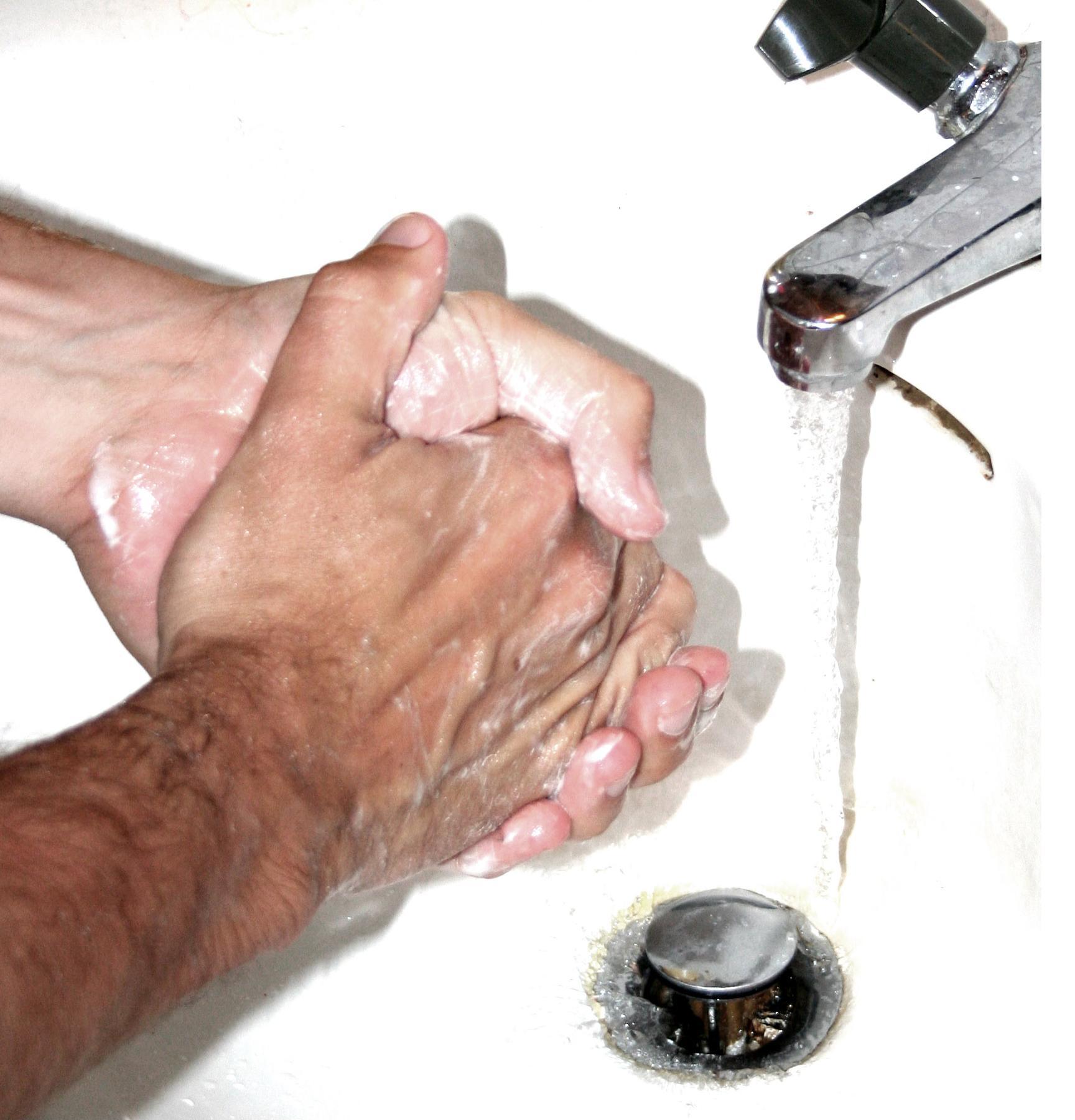
If you read yesterday’s post, you know that fecal transplants can be effective weapons against microbial pathogens.  That’s good news considering that medical students do not know when to wash their hands.

Eighty-five medical students at Hannover Medical School who were about to begin clinical studies (meaning that they were to begin examining and treating real patients) were given a questionnaire asking whether hand washing was required under various scenarios.  For example, must you wash your hands after removing gloves?  Answer:  yes.  How about after touching a patient’s bed?  Also yes.  Only a third of the students got all the answers right.

Interestingly, the medical students predicted that they would have better hand-washing compliance than nursing students, when in fact the reverse was true.  Nursing students were much better at washing their hands than were medical students. 

Needless to say, this was a small study at a single school.  It does highlight the need for teaching students when to wash their hands and for ensuring that experienced health care professionals continue to exercise proper hand-washing protocols.  As helpful as they may be, nobody wants unsolicited fecal transfers.