Science-- there's something for everyone

Sunday, April 8, 2012

Oxygen ions detected in the upper atmosphere of Dione

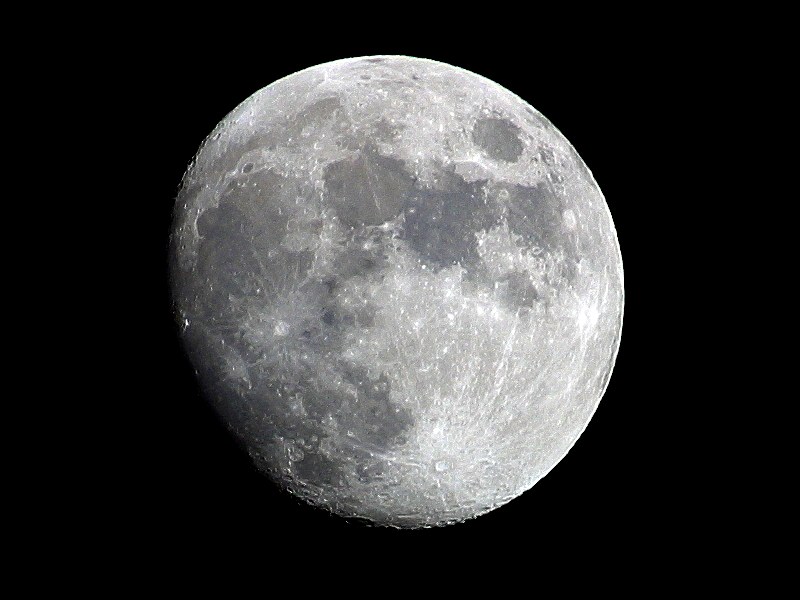
Comparison of Earth, our moon and Dione.
Dione is an icy moon orbiting Saturn.  The Cassini spacecraft that is currently investigating Saturn and its moons has found molecular oxygen ions (O2+) in the upper atmosphere of Dione.  What this does not mean: there could be life on Dione.  I’m not saying there can’t be life on Dione, just that this new information doesn’t sway the balance one way or the other.  What it does mean: life is not required to create abundant amounts of atmospheric oxygen above icy moons.

Robert Tokar and Michelle Thomsen from Los Alamos National Laboratory and their colleagues from six other institutions in the U.S. and U.K used the Cassini Plasma Spectrometer to identify molecules present in Dione’s atmosphere and to determine where those molecules came from. In effect, the cosmologists have identified a way to create O2+ and other forms of oxygen without resorting to photosynthetic organisms. Here’s how it works.

Dione is covered with water ice (H2O). Like all of Saturn’s moons, Dione is subject to a constant storm of charged particles spewing out from Saturn’s magnetosphere. These high-energy particles slam into Dione’s surface and throw a cascade of oxygen molecules high up into the atmosphere.  This phenomenon, called ‘sputtering’, is surprisingly effective. In fact, the concentration of oxygen ions in Dione’s upper atmosphere is similar to the amount found high above the Earth, though obviously our oxygen has a different origin. 

If you are a regular reader of this blog, you’ll know that I include a relevant video with some frequency.  This article is no exception, and the video below is from astronomy fan, isaworld2012.  I admire her enthusiasm, although the symbol for oxygen is not zero.


Saturday, April 7, 2012

To improve memory, put failure in context


Can working memory be improved by influencing a person’s attitude? According to Frédérique Autin and Jean-Claude Croizet of the Universite de Poitiers, the answer is yes. The researchers put some sixth graders through some mental challenges to test this point.

Eleven year old kids were divided into three groups. Two thirds of the kids were given a set of anagrams that were so difficult none of the children were able to solve any of them in the allotted time.  Of those, half were subsequently given a pep talk about how failure in no way reflects on one’s abilities or intelligence and is in fact a sign of learning. A third group wasn’t given the anagrams at all. All the children were then given a working memory test.  Those students who had been told that experiencing difficulty with a problem was normal had slightly better working memories than the students who hadn’t had their failures reframed or hadn’t done any anagrams. In fact, the kids who had their failure at solving anagrams reframed into a positive experience did even better at subsequent memory tests than kids who had solved easy anagrams.

When the kids were asked to decide how well a series of traits described them, those who had had their difficulties reframed were quicker to reject negative attributes and to rank themselves as being competent and good. To be clear, the researchers weren't simply buffing up the students' self esteem by telling them how great they were.  They were merely explaining that failure is a normal part of learning.  The kids drew their own conclusions about themselves.

Friday, April 6, 2012

Supermarkets can affect weight


A team of French scientists plus their colleagues from Australia, the U.S., Canada and Sweden tested whether the location where people buy their food can affect how much they weigh. Somewhat surprisingly, the answer is that it can.

The researchers surveyed over 7000 Parisians as they went about their normal food shopping for a year. During that time, the participants used over 1000 different supermarkets. It was noteworthy that only 30% of shoppers regularly used the closest supermarket to their homes, and only 11% stayed within their neighborhoods. This means that researchers can’t make any assumptions about what kinds of foods are being consumed based on neighborhood shops and restaurants.

After accounting for factors such as socioeconomic status, people who shopped at the same store were more similar in body mass index (BMI) and waist circumference (WC) than people who lived in the same neighborhood. In particular, shopping in a discount store was associated with a higher BMI and WC. Traveling further to reach one’s primary supermarket was also associated with greater BMI and WC.

I should point out that the differences were not large. Changing from one supermarket to another is not going to greatly affect a person’s health. However, health care professionals may want to keep these data in mind when designing educational campaigns.

Thursday, April 5, 2012

Perimenopausal memory loss? Not so much


I’m sure you’re aware that menopause is the cessation of ovulation that occurs when a woman reaches a certain age, usually her late forties or early fifties.  What you may not know is that a woman can experience a number of unpleasant symptoms, including hot flashes and insomnia, for up to ten years prior to her last period.  This stage is known as ‘perimenopause’ or ‘menopause transition’.

One of the commonly reported symptoms of perimenopause is memory loss.  But is this a real effect or just anecdotal?  To find out, Miriam Weber, Mark Mapstone and Jennifer Staskiewicz from the University of Rochester and Pauline Maki from the University of Illinois at Chicago put 75 perimenopausal women through their mental paces.

The women, none of whom had any history of neurological disease, were given a series of memory challenges.  Some examples include being asked to repeat back increasingly long strings of numbers both forwards and backwards, to name as many items in a category as possible (animals that begin with the letter F) and to identify objects that had been cut into pieces.

Prior to taking these tests, the woman were asked to assess how forgetful they were, how well they thought their memories worked, and whether they suffered from anxiety or depression. Hormone panels were taken on test days, which were scheduled to fall between day four and seven of each woman’s menstrual cycle.

While 67% of the women claimed to have suffered from some degree of memory loss, most of them did not in fact have any memory deficits. That is, they performed as expected on almost all the tests. Although the women did a bit worse than expected on a few of the challenges, because they had not been tested before they became perimenopausal, it’s difficult to know whether this indicates any real decline. There were no correlations between hormone levels and cognitive function either.

So it doesn’t look like transitioning into menopause is sufficient to wreak havoc with women’s memories, despite perceptions. You can decide for yourself whether to celebrate that news or mourn the loss of a darned good excuse.    


Wednesday, April 4, 2012

Just for fun: Ocean currents


Data visualizers at NASA's Goddard Space Flight Center put together the following animation of surface ocean currents.


Hat tip: Not Exactly Rocket Science.

Tuesday, April 3, 2012

Message by Neutrino


Daniel Stancil from North Carolina State University and more than a hundred colleagues from all across the globe have sent the world’s first neutrino message.  That is, they sent a message composed solely of subatomic particles called neutrinos, rather than of electromagnetic waves or paper.

Communicating by neutrino certainly has advantages.  For one thing, neutrinos are unimpeded by physical objects. That means that if you want to send a message to the other side of the Earth, you can just aim your neutrinos straight through the ground. No need for satellites or connecting cables. We’d never have to wait for our Mars rovers to be on the right side of the planet to send them instructions.  Also, because neutrinos are virtually mass-less, gravity has little affect on them. They just keep going in a straight line regardless of what’s in their path.

Unfortunately, you need some heavy-duty equipment to send a message by neutrino, including a particle accelerator at one end and an extremely powerful detector at the other. Needless to say, you won’t be trading in your mobile phone anytime soon. 

Thus far, the researchers have only sent a single word, which fittingly enough was ‘neutrino’. They used a binary code of firing and not firing pulses of neutrinos to represent each letter, kind of like the dots and dashes used in Morse code.  It took them over two and a half hours to send and decode that message and achieved an overall data transmission rate of 0.1 Hz. To put that in perspective, you’re probably reading this on a device that's at least a million times faster.  As the authors admit, “significant improvements in neutrino beams and detectors [are] required for practical applications.”    


Monday, April 2, 2012

Doubts cast on collision theory of moon formation


The prevailing theory for how our moon formed is that an enormous collision between the early Earth and a Mars-sized object blasted it into space. If true, much of the substance that makes up the moon should come from the Earth, but a sizable chunk should have originated from the other planetary object, dubbed Theia. Surprisingly, Junjun Zhang and her colleagues from the University of Chicago have found that this is not the case. Essentially all of the moon’s material appears to have come solely from the Earth.

How did the cosmologists reach this conclusion? They compared the ratios of isotopes (atomic variations) of titanium found both on the Earth and in samples brought back from the moon. Different objects throughout the solar system have different ratios of these isotopes. For example, asteroids that have been collected on Earth have highly varied titanium isotope signatures. It’s extremely unlikely that Theia would have had the exact same ratio of titanium isotopes as Earth. Therefore, if the moon truly were a child of their union, it should contain a titanium ratio somewhere between the two.

That’s not what the researchers found at all. Instead, the titanium ratio of the moon is virtually identical to that of the Earth. This strongly suggests that all of the material in the moon came from the Earth and none of it came from the hypothetical Theia.

Unfortunately, without Theia colliding into the Earth, there isn’t a good explanation for how the moon got here. Other hypotheses, such as that the moon spun out of a rapidly rotating Earth or that the moon was a free-floating entity that got captured by Earth’s gravity, have serious flaws. Perhaps Theia was involved but didn’t contribute any material to the building of the moon. This doesn't seem particularly likely either.

I guess it’s back to the drawing board for moon formation theorists.