Science-- there's something for everyone

Monday, May 14, 2012

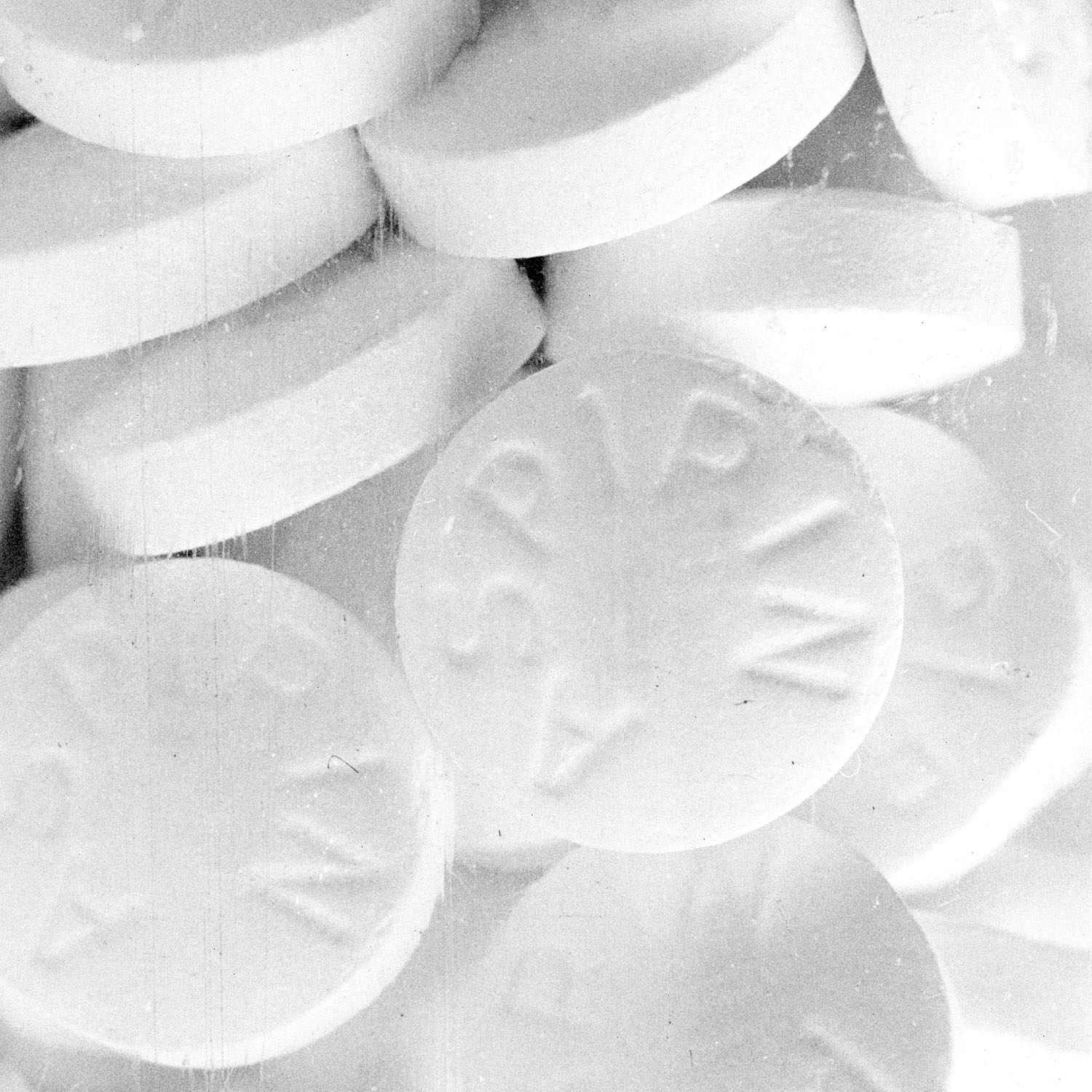
Aspirin the wonder drug is even more wonderful


Peter Rothwell of the University of Oxford and his colleagues have published two papers outlining the correlation between taking aspirin and not getting cancer. Spoiler alert: you’re going to want to stock up on aspirin. Waiver alert: I’m not a medical doctor. Check with one before starting aspirin therapy.

For one set of experiments, the authors compiled data from five different aspirin trials involving over 17,000 people. The trials were originally conducted to determine the effect of taking aspirin on cardiovascular health, but they contained data on cancer as well. Taking aspirin daily significantly reduced the risk of developing cancer or of having that cancer metastasize to the rest of the body. This was true for lung, liver, bone and brain cancers. The exact mechanism is not known, though it may have something to do with the inhibition of platelet formation.

Daily aspirin was protective even if the person had only been taking it for a few years, and even if the aspirin regimen was started after the person had already been diagnosed with cancer (if the cancer hadn’t already spread throughout the body). How great was the benefit? Metastasis was reduced by up to 40% compared to controls who were not taking aspirin. If the person had started taking aspirin before being diagnosed with cancer, the risk of subsequent metastasis was reduced by 70%.

The second set of experiments, using data from 51 different aspirin trials and over 70,000 people, showed similar results. Twenty-year cancer mortality was decreased by up to 30% in people taking aspirin. After taking aspirin for three years, the risk of getting cancer was decreased by about a quarter.

Taking aspirin is not without risks of its own. In particular, aspirin can increase the risk of major bleeding which, in rare cases, can be fatal. However, that risk diminishes over time. If you’ve taken aspirin safely for three years, you probably don’t have to worry about it anymore. But again, consult a doctor if you’re interested in taking daily aspirin as a prophylactic against cancer or heart disease.

Photo by Sauligno, 1/1/2000.

Sunday, May 13, 2012

Just for fun: Mother's Day song


For your Mother's Day listening pleasure, here's a song from Cadamole. Enjoy.


Saturday, May 12, 2012

Bad news for mothers—labor has gotten longer


Katherine Laughon of the National Institutes of Health and her colleagues compared women who gave birth in the sixties to women who gave birth in the naughts (2002 to 2008). The more recent deliveries took about two to three hours longer. I’m sure that’s the last thing anyone contemplating bearing a child wants to hear.

The earlier births were recorded as part of a prospective study called the National Collaborative Perinatal Project (CPP). In contrast, the second group was part of a retrospective study called the Consortium on Safe Labor (CSL). That means that the first group was recruited for the study before going into labor, whereas the second group was asked to remember what had happened some time after the fact. The difference isn’t necessarily that big if there are good records, but in general, prospective studies are considered to be more reliable.

There were some definite differences both in obstetrical practices and in the participants themselves that might have accounted for the change in labor lengths. Compared to the CSL women, the women in the sixties had lower body mass indexes and gave birth to smaller babies. They were far less likely to receive either epidurals or oxytocin and had one quarter as many c-sections. On the plus side, the CSL babies had higher apgar scores (a test of neonatal health).

It’s not clear whether these changes alone were responsible for the longer labors.  It may have been a combination of factors or something else entirely.  In any case, it’s important that doctors no longer use outmoded guidelines for deciding when it’s time to intervene in labors that don’t seem to be progressing.

Friday, May 11, 2012

Why dinosaurs went extinct but mammals didn’t


Mammals and dinosaurs coexisted for millions of years, but only mammals (and the branch of dinosaurs known as birds) survive today. According to Daryl Condon (who is affiliated with three universities including the University of Zurich) and his colleagues, this may have been due to their very different reproductive strategies.

Mammals nurture their young internally, whereas dinosaurs lay eggs, which have a strict upper size limit. A larger egg requires a thicker sturdier shell. Above a certain thickness, the embryo would no longer be able to get oxygen through that shell. This means that while a baby elephant and a baby squirrel can be vastly different in size, newborn dinosaurs must be much more similar in size. Thus, a mother elephant is about twenty times as large as her newborn calf, but a similarly sized mother dinosaur would have been 2500 times larger than her baby.

There are other ramifications of the dinosaur’s oviparous lifestyle. Mammalian babies tend to eat the same foods as their parents and are fed milk until they are able to do so. They therefore fill the same ecological niche as their parents. In contrast, baby dinosaurs might have filled completely different niches than their parents, and indeed a different niche at every stage of their development.

In fact, Condon and his colleagues propose that where a given environment could have supported many different mammalian species, it would have supported only a single dinosaur species. For example, in one ecosystem, you might have rabbits eating shrubs, small deer eating leaves from small trees and giraffes eating the leaves from tall trees. In the same ecosystem, you might have newborn sauropods eating the shrubs, juveniles eating the leaves of small trees and adults eating leaves from the tallest trees. All of these niches would have been filled by a single species. In a similar manner, carnivorous dinosaurs from a single species but different ages might have fed on the different sizes of that sauropod.

This in turn, made the dinosaurs much more vulnerable to extinction. Suppose one type of plant disappeared from the ecosystem. Say for some reason, there were no small trees. You’d still have plenty of mammal species eating other types of plants, but with no juvenile sauropods you’d have no adults and no new babies either. This might precipitate the end of the dinosaurs from that region.

Obviously, these are oversimplifications. Still Condon and his colleagues believe this goes a long way to explain why mammals and birds survived the Cretaceous–Tertiary (K–T) extinction but dinosaurs did not.

Thursday, May 10, 2012

Contagious cancers


Why are so many people still getting cancer? The unfortunate answer may be that they caught it from someone else. Let me back track and say that cancer itself is not contagious. However, many cancers are originally caused by infectious agents like viruses.  How many? Catherine de Martel and her colleagues from the International Agency for Research on Cancer, France, estimate that around 16% of all cancers worldwide began as infections.

Ninety-five percent of those two million new cancer cases per year are attributable to just four types of viruses: Helicobacter pylori, hepatitis B and C viruses, and human papillomaviruses. This is actually good news, because we have vaccines against many of these agents. In fact, vaccination against viral cancers is probably reflected in the data, since more affluent countries have a far lower rate of these kinds of cancers. While only about 7% of cancers in developed countries were caused by infection, 33% of cases in sub-Saharan Africa fell into that category.

Cancer is considered to be non-communicable, and that’s still largely true. Not only are the majority of cancers not caused by infectious agents, but those that are tend to be caused by viruses that are not that easy to catch. These are not infections you’d get from hugging someone. Nevertheless, it’s important to recognize the role that viruses play in causing cancer, and the role that vaccination may play in preventing cancer.

As we learn more about both cancer and virology, it may be that more cancers with previously unknown provenance become attributable to viral infection. On the other hand, Ed Yong, who writes the Not Exactly Rocket Science blog for Discovery Magazine, points out that the proportion of cancers that result from infections has not changed for more than a decade.


Wednesday, May 9, 2012

Just for fun: Naked Science Scrapbook


I love videos that make science fun and easy to understand.  Here's another offering along that vein, this time from the folks at The Naked Scientist.  It's part of their video series called Naked Science Scrapbook.


By the way, The Naked Scientists also produce some excellent podcasts.  You can find a link to their website under 'My favorite science podcasts' to the left.

Tuesday, May 8, 2012

If you can understand this, thank a DNA replication error.


Our DNA replication machinery is remarkably accurate and efficient, but errors do occasionally occur. For example, the same gene may be replicated more than once, resulting in multiple copies of that gene. According to Evan Eichler and his colleagues from the University of Washington and other institutions, one such duplication event may have been responsible for the differences between our brains and those of the great apes.

The original gene, SRGAP2, encodes a protein that is critical for neuronal development in mammalian embryos. Around the time Australopithecus was evolving into Homo, we ended up with a couple of extra copies of this gene. Chimps and orangutans each have only one version of the gene, but we have four. The first duplication (SRGAP2B) probably occurred about 3.4 million years ago (mya), the next (SRGAP2C, a copy of SRGAP2B), 2.4 mya, and the last (SRGAP2D, also a copy of SRGAP2B) only 1 mya.

Upon reading that humans have extra copies of a gene involved in neuron maturation, you might think that it’s the excess amounts of this protein product that lets us be so brainy. Not so. Franck Polleux of the Scripps Research Institute and his colleagues found that the second SRGAP2 duplication (SRGAP2C) encodes a protein that actually interferes with the original gene product. To operate properly, two SRGAP2 proteins must combine together. Because SRGAP2C encodes an incomplete copy, it can pair with the original SRGAP2, but the result is unusable. In other words, thanks to the duplication events, we have less functional SRGAP2 protein, not more. 

The consequence of this is that the developmental schedule of neurons is altered. With SRGAP2 blocked during embryogenesis, the period of time allowed for neuronal development is elongated. This allows for the formation of longer and more numerous neuronal spines, the parts of the neuron that make connections with other neurons. SRGAP2 also inhibits neural migration, the spreading of neurons throughout the brain. Without it, neurons can continue to migrate for longer. It’s not difficult to see how these changes would have had a huge impact on the evolution of hominin brains.


Think about this: not only were there errors in replicating SRGAP2 millions of years ago, but those errors resulted in a protein product that exactly interfered with the original product. We may very well owe our ability to reason to those serendipitous events. You gotta love evolution.