Science-- there's something for everyone

Thursday, December 20, 2012

Dishwashing doesn’t kill norovirus


The leading cause of food borne illness is not Escherichia coli or Salmonella. No, that honor goes to the norovirus, a group of viruses named for the Norwalk virus. Transmission of noroviruses can be via direct contact or contaminated food or water. In general though, if you got sick with a norovirus, you probably ate someone’s poo.

Most restaurants do their best to make sure their food is safe. They use techniques known to kill bacteria such as E. coli. But how well do these food safety practices work against a virus like the norovirus? To test this, researchers led by Lizanel Feliciano from the Ohio State University allowed cream cheese contaminated with either E. coli or norovirus stock to harden onto ceramic plates and stainless steel forks. Contaminated milk was left to dry in drinking glasses. The tableware was then washed with detergent and sanitized with either chlorine-bleach or quaternary ammonium compounds. Titers of bacteria or virus were taken both before and after air-drying and washing.

Not surprisingly, the bacteria and viruses did fine on the air-dried surfaces prior to cleaning. If a surface has been contaminated, the bugs on it can survive for an extended period of time, up to a month in the case of norovirus. Bacteria are more sensitive but can still last quite some time.

Washing the tableware dropped the bacterial load significantly. Unfortunately, that wasn’t the case for norovirus. There was a reduction in the viral titer after washing, but not nearly enough to prevent disease transmission. This was true for both mechanical and manual dishwashing methods, though mechanical washing was slightly better at killing bacteria. Interestingly, sanitization did not improve the outcomes for either bacteria or virus. The greatest drop in microbe levels was achieved solely by washing, subsequent sanitization was no better than spraying with tap water.

I should point out that it only takes a handful of norovirus particles to cause an infection. In other words, you have to eliminate all trace of the virus from tableware to ensure food safety. Standard washing methods simply can’t achieve this goal, though vigilance on the part of restaurant management to ensure that sick people stay out of the kitchen may do so. Bon appétit.


Lizanel Feliciano, Jianrong Li, Jaesung Lee, & Melvin A. Pascall (2012). Efficacies of Sodium Hypochlorite and Quaternary Ammonium Sanitizers for Reduction of Norovirus and Selected Bacteria during Ware-Washing Operations PloS ONE : doi:10.1371/journal.pone.0050273.


Wednesday, December 19, 2012

Just for fun: 2012 Infographics

The Visual-ly Blog has a collection of 20 of the best infographics of 2012.  They range from the beautiful to the fascinating. You can see the list here, but below are two of my favorites.

Here are the color palettes for 10 artists over 10 years.


10 Artists, 10 Years: Color Palettes

And KVSStudio takes a look at what the world would be like...


If the World were 100 People


Tuesday, December 18, 2012

Lose weight by remembering meals


Does the memory of a large meal affect future hungriness? According to researchers from the University of Bristol, led by Jeffrey Brunstrom, yes, it can.

What I love most about this study is the self-filling soup bowl used by the researchers. 100 participants were shown bowls containing either 300 or 500 ml of soup. They proceeded to eat the soup. Unbeknownst to the diners, the bowls had a secret filling/emptying system that covertly changed the amount of soup in the bowls. Thus, the people who saw 300 ml in their bowls were actually eating either 300 or 500 ml of soup. In the same way, the people who were presented with 500 ml of soup actually ate either 300 or 500 ml. There were 25 people in each of these four groups.

You can see a diagram of the soup-filling apparatus below. Volunteers were instructed to stop eating when the soup reached a certain line in the bowl to ensure that they didn’t discover the filling apparatus at the bottom (the total amount of soup was adjusted to account for this).

thumbnail


doi:10.1371/journal.pone.0050707.g001

Only six people out of hundred noticed that the volume of soup in their bowls was being manipulated. Those people were replaced with another six volunteers.

The subjects had been asked to abstain from eating for at least three hours before the test. After eating their soup, they were sent home with a buzzer to remind them to rate their level of hunger every hour for the next three hours. People who thought they had eaten 500 ml of soup but really had only consumed 300 ml reported more satiety than people who consumed 500 ml of soup but thought they had eaten 300 ml. In other words, the perception of having eaten a large meal had a great effect than the actual amount ingested.

This data suggests that if you wish to help a dieting friend, trick him into thinking he’s consuming a larger portion than he really is. I can see a market for a line of bowls with false bottoms that appear larger than they really are.


Brunstrom JM, Burn JF, Sell NR, Collingwood JM, Rogers PJ, Wilkinson LL, Hinton EC, Maynard OM, & Ferriday D (2012). Episodic memory and appetite regulation in humans. PloS one, 7 (12) PMID: 23227200.


Monday, December 17, 2012

Antibiotic resistant soil


You know that not taking all your antibiotics can lead to the evolution of drug resistant bacteria. You even know that a much larger problem is the amount of antibiotics given to livestock. But what you may not have realized is that the problem isn’t just that the bugs living in animals will become drug resistant and then infect humans. No, a bigger problem may be that bacteria living in soil can become resistant to drugs pooped out of medicated animals. Yes, antibiotic resistance is being spread throughout our agricultural fields.

Researchers from Agriculture and Agri-Food Canada applied a mix of sulfamethazine (SMZ), tylosin (TYL), and chlortetracycline (CTC), three kinds of antibiotics common in livestock management, to fields annually for ten years. At the end of that time, soil samples were taken and compared to similar fields that had not been treated. 

When the scientists added SMZ or TYL to the samples, they found that the drugs biodegraded much more quickly from fields that had previously been exposed to those drugs. In other words, the bacteria in the virgin soils were far less equipped to deal with the influx of antibiotics. In contrast, bacteria that had spent the last ten years in soil containing antibiotics had adapted to those drugs. The scientists even discovered at least one type of bacteria that was not only resistant but appeared to actually use SMZ as a nutrient source.

This news isn’t necessarily bad. As long as the soil bacteria don’t affect human health (and I realize that’s a big if), we might be able to employ them to clean up fields before the drugs deposited there by livestock can leach into water sources. Of course, we have little hope of cataloguing, let alone managing, all the kinds of bacteria living in the dirt. So we’re all probably better off if fewer drugs get deposited in those fields going forward.


Add caption
Edward Topp, Ralph Chapman, Marion Devers-Lamrani, Alain Hartmann, Romain Marti, Fabrice Martin-Laurent, Lyne Sabourin, Andrew Scott, & Mark Sumarah (2012). Accelerated Biodegradation of Veterinary Antibiotics in Agricultural Soil following Long-Term Exposure, and Isolation of a Sulfamethazine-degrading Microbacterium Journal of Environmental Quality : doi: 10.2134/jeq2012.0162.


Friday, December 14, 2012

Dogs don't generalize words like humans do


When humans learn the names of objects, they generally associate that name with the overall shape of the object. Thus, if they are taught that a U-shaped object is called a ‘DAX’ and asked to identify another DAX, they’ll pick an object with the same shape, but not necessarily the same size or texture. In other words, when it comes to nomenclature, we generalize in a specific way with a bias toward shape. Is this true for dogs as well?

There are a handful of dogs with a large enough vocabulary to test this feature of language. I’ve written before about Chaser, who knows as many words as a human toddler (over a thousand). This time, the test subject was a Border Collie named Gable, who reliably knows the names of over 40 different objects.

Emile van der Zee, Helen Zulch and Daniel Mills from the University of Lincoln and Gable's trainer taught the dog specific nonsense names for some novel objects. For example, in one set of experiments, he was taught that the L-shaped object shown as (1) in the figure below was a GNARK. When asked to retrieve another GNARK from amongst pairs of the objects shown, he invariably chose something the same size (2 or 3) rather than the same shape (4 or 7). Apparently, Gable was not making the same mental associations that humans do.


I don’t know about you, but I’d say that if object 1 was presented to me as a GNARK, then objects 4 and 7 are definitely GNARKS as well. This may be because, as a human, I rely heavily on my eyesight to interpret the world. Dogs no doubt rely on other cues, perhaps weight or mouth-feel. As you can see below, Gable does mouth each object before deciding which is the GNARK. Since word generalization is a critical feature in language, these data may mean that the way humans developed language is not the only road to that achievement. 


Below, a test session in which Gable is asked to retrieve a u-shaped DAX. Between trials, the trainer lets Gable play with the DAX prototype. As the test begins, the researcher pretends to make that prototype one of the choices.


Test session in which Gable is asked to retrieve a u-shaped DAX. Between trials, the trainer lets Gable play with the DAX prototype. As the test begins, the researcher pretends to make that prototype one of the choices.


Emile van der Zee, Helen Zulch, & Daniel Mills (2012). Word Generalization by a Dog (Canis familiaris): Is Shape Important? PloS ONE : doi:10.1371/journal.pone.0049382


Thursday, December 13, 2012

The secret of the porcupine’s quill


North American porcupine quills are notoriously easy to stick into something but hard to pull back out. A dozen researchers from MIT, Harvard, Xi’an Jiaotong University and Trinity College have now cracked the puzzle as to why this is so. And in case you’re wondering why you should care, consider that there are a lot of medical devices that also function by being stuck into people.

Porcupine quills are composed of a black tip, typically a few millimeters long, and a much longer white shaft. The tip contains microscopic backward-facing barbs, each less than 50 microns (millionths of a meter) across. The researchers compared normal porcupine quills to quills that had been carefully sanded down to remove those tiny barbs without altering the overall shape of the quill. The barbed quills required 54% less penetration force than the sanded quills. Interestingly, it’s the region 2-4 mm from the tip that’s critical for reducing penetration force, and not the very tip. Quills with the barbs sanded down only in this region required significantly more force to penetrate flesh regardless of whether the barbs in the first 2 mm were intact.

It turns out that a barbed porcupine quill requires less penetration force than an 18 gauge hypodermic needle. Though, to be fair, you’ll rarely need to be stuck with such a large needle unless you’re giving blood. So, I don’t think you’ll be seeing your doctor pull out a porcupine quill the next time you get your flu shot. On the other hand, the backward facing barbs somewhat counterintuitively result in a cleaner cut with less tissue damage. This is despite the fact that the quills with barbs penetrate deeper into flesh and are harder to remove. This characteristic may prove useful for implanting medical devices.

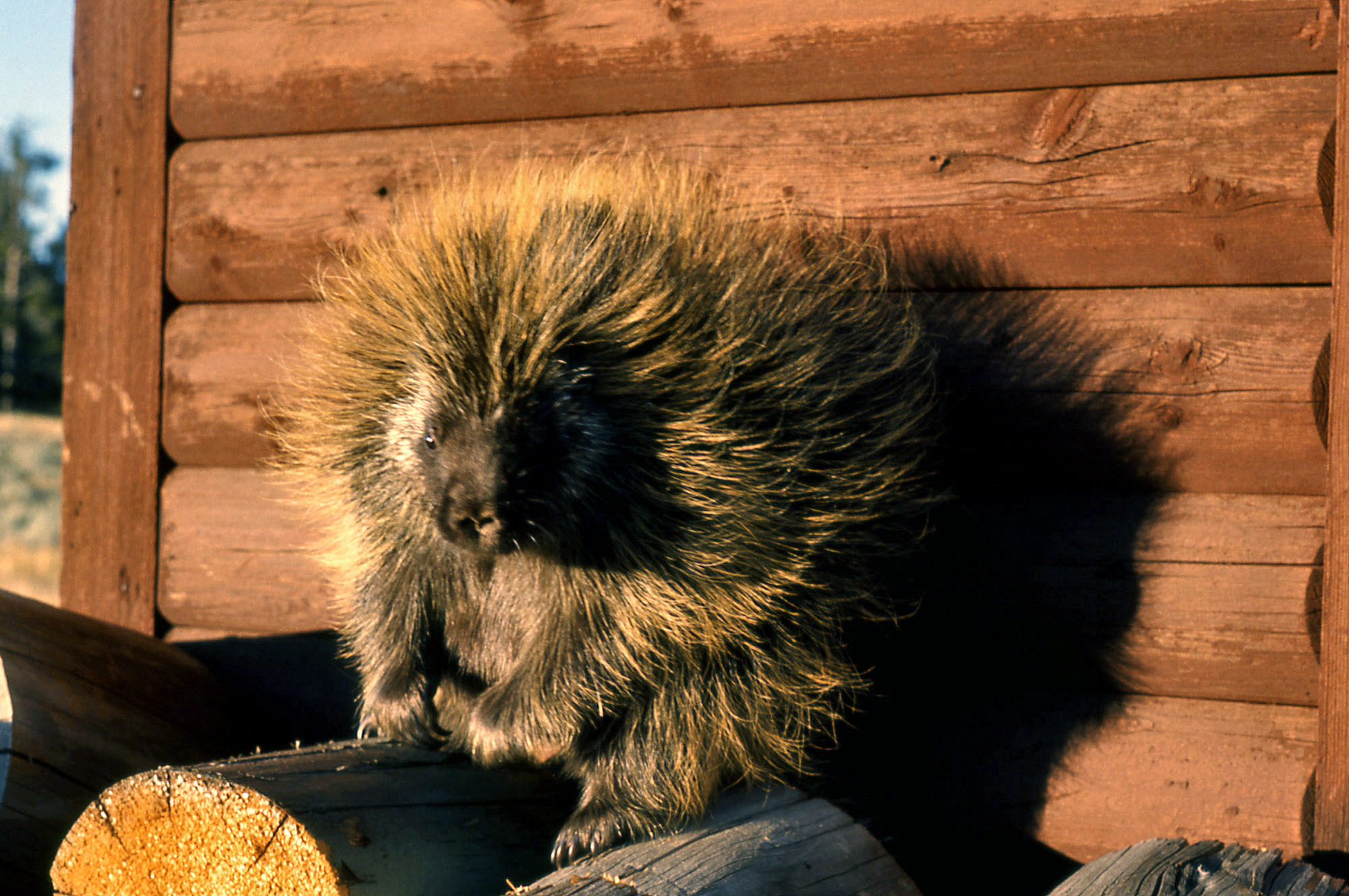
And now, a random porcupine.


Woo Kyung Cho, James A. Ankrum, Dagang Guoa, Shawn A. Chester, & et al (2012). Microstructured barbs on the North American porcupine quill enable easy tissue penetration and difficult removal Proceedings of the National Academy of Sciences of the United States of America : doi: 10.1073/pnas.1216441109.


Wednesday, December 12, 2012

Just for fun: Transit of Venus


On June 6th, there was a transit of Venus across the face of the sun. While a spectacular sight in any case, this event was also of historic and scientific interest. In particular, the difference between the observations made at opposite ends of the Earth (Svalbard, Norway and Canberra, Australia) were used to confirm distances in the solar system. The following video demonstrates this example of 'parallax'.