Science-- there's something for everyone

Monday, May 20, 2013

Tracking the progression of Huntington’s Disease

Huntington’s Disease (HD) is one of those rare diseases for which we know the exact genetic cause. If either of your parents bequeathed to you a huntingtin gene with extra CAG repeats, you will one day succumb to this terrible illness. This means that if you have a family history of HD, you can choose to have yourself tested and thus learn your inevitable fate, at least with regards to HD.

Graphic showing the excessive repetitions of the cytosine-adenine-guanine (CAG) nucleotide sequence in a gene from a Huntington's disease patient
Graphic showing the excessive repetitions of the cytosine-adenine-guanine (CAG) nucleotide sequence in a gene from a Huntington's disease patient (bottom) compared to a gene from a person without the neurodegenerative disorder (top).
Credit: National Institute of General Medical Sciences, National Institutes of Health


There is one more implication of being able to test for HD. It means that doctors can now follow the progression of an illness in people who are completely asymptomatic but who will one day have that disease. This kind of certainty is very unusual in medicine. Even with the best family histories, you can’t know for sure if someone will one day succumb to Alzeimer’s or cancer.
Sarah Tabrizi of the University College London and her colleagues, including TRACK-HD (a multinational prospective observational study of HD) investigators, chose to take advantage of this circumstance. They enrolled close to 400 volunteers who had the HD genetic marker but who were asymptomatic. The subjects were followed for thirty-six months. During that time, they were tested for cognitive and motor skills and had periodic brain scans to detect any loss of white or gray matter. Not surprisingly, the subjects showed steady declines in many of these areas. More importantly, the doctors could use the data to construct a sequence of expected failings.
At first glance, this may seem like the world’s most depressing clinical study. Actually, it still seems that way after multiple glances. However, it’s important to keep in mind that the better HD is understood, the more chance there is for a cure. These data could also help doctors learn how to postpone or ameliorate the worst of the symptoms. Barring that, knowing the way the disease progresses could at least give people a more accurate assessment of their futures.

Tabrizi, S., Scahill, R., Owen, G., Durr, A., Leavitt, B., Roos, R., Borowsky, B., Landwehrmeyer, B., Frost, C., Johnson, H., Craufurd, D., Reilmann, R., Stout, J., & Langbehn, D. (2013). Predictors of phenotypic progression and disease onset in premanifest and early-stage Huntington's disease in the TRACK-HD study: analysis of 36-month observational data The Lancet Neurology DOI: 10.1016/S1474-4422(13)70088-7.


Friday, May 17, 2013

Human-caused climate change--Now even realer

John Cook from the University of Queensland and his colleagues have now put to rest the idea that there’s no consensus on global warming. Global warming is real, and it’s caused by humans. So say over 97% of peer-reviewed climate studies.

The researchers pored through nearly 12,000 published papers on climate science and separated them into ones that explicitly endorse anthropogenic (human-caused) global warming, those that explicitly reject that premise, and those that offer no position on the matter. Of the papers that expressed any judgment at all on global warming, 97.1% clearly stated that humans were the cause. When the authors of the papers were asked to rate their own positions on global warming, that number increased slightly to 97.2%.

For perspective, Greg Laden points out that, among scientists, there's as much credence paid to the notion that humans are not causing global warming as there is to the existence of Big Foot.


The scientific community has spoken. Global warming is real and we caused it. It’s up to us to fix it if we can.  

Cook discusses his results below.


Still not convinced? By all means, check the results for yourself. Study author Dana Nuccitelli suggests you visit Skeptical Science's Consensus Project where you can sign up to review abstracts and make up your own mind. 


Cook, J., Nuccitelli, D., Green, S., Richardson, M., Winkler, B., Painting, R., Way, R., Jacobs, P., & Skuce, A. (2013). Quantifying the consensus on anthropogenic global warming in the scientific literature Environmental Research Letters, 8 (2) DOI: 10.1088/1748–9326/8/2/024024.

Thursday, May 16, 2013

Can early reading and math skills predict future earning?

How well do early reading and math ability correlate with success later in life? Better than you might think, according to Stuart Ritchie and Timothy Bates from the University of Edinburgh. They found that reading and math achievement at age seven predicted socioeconomic status (SES) thirty-five years later. 

The study participants included over 18,000 children born the same week in 1958. In 1965, when the kids were seven years old, their parents filled out surveys to determine their childhood SES. The parents provided information on their type of job (professional, skilled or unskilled), whether the family rented or owned their home and how many rooms it contained. 

Also at age seven, the children were rated for math and reading ability, both on standardized tests and by their teachers’ personal evaluations. At age eleven, the kids were given intelligence tests, and at age 16, they were asked about their motivation and perceived ability to do well in school.

Finally, at age 42, the participants were asked how much education they had ultimately completed and to provide their current SES by the same measures indicated above. 

There was a definite correlation between both math and reading ability and SES at age 42. This was true even after accounting for childhood SES and intelligence. If achieving a high SES is your top priority, you'd better hope you were paying attention in second grade.

As usual, I have a few comments about this data. First, correlation is not causation, and Ritchie is the first to point this out. Second, even if the association between early academic skills and future earning potential turns out to be true, this doesn’t mean that there aren’t other paths to success. Finally, there’s nothing magical about age seven. Kids in Finland don’t even start formal education until that age, and they have the best educated students in the world. I wonder what the results would have been if reading and math skills at a later age were included. In other words, would reading proficiency at age 12 correlate more or less strongly with future SES than reading ability at age 7?

While I agree that proficiency in math and reading are extremely important, I hope this study won’t be used to further stigmatize students who are not doing well. If this news galvanizes schools to make a greater effort to help students who are struggling, that’s all to the good.


Ritchie, S., & Bates, T. (2013). Enduring Links From Childhood Mathematics and Reading Achievement to Adult Socioeconomic Status Psychological Science DOI: 10.1177/0956797612466268.


Wednesday, May 15, 2013

Just for fun: Chris Hadfield edition

By now, many of you know that rock star Canadian Space Agency astronaut Chris Hadfield has returned to Earth from the International Space Station (ISS). 

Why do I call him a rock star?


While he was up there, one of his jobs was to answers questions from the public, and he did a delightful job. Frankly, I never even thought about many of the issues he addresses.

For example, have you been itching to know how astronauts brush their teeth in space? 


Besides telling us how astronauts shave, sleep or exercise, Hadfield also explained some of the experiments that were conducted on board the ISS. Here's an example with a bonus of spectacular solar wind footage.


You can catch his many fascinating videos on his YouTube channel.

Tuesday, May 14, 2013

Dogs are even more a member of the family than you thought

We’re ten times as much bacteria as we are human, if you go by cell numbers. But we don’t all have the same mix of microbes coating us inside and out. Family members tend to share bacterial communities with each other. No surprise there, since people living in close contact tend to interact physically and to eat the same foods. What may surprise you is to know that the microbe similarities extend to pets.

Researchers led by Rob Knight and Se Jin Song of the University of Colorado, Boulder compared the microbiota in families consisting of heterosexual couples living with or without their biological children and with or without dogs. Fecal, oral and skin swabs were taken from all humans and dogs in the study. The bacterial makeup of the humans was more similar to that of their family members than to unrelated people. The microbiota of humans was also more similar to that of their own pets than to other people’s dogs. In addition, adults who owned dogs had a greater diversity of skin bacteria.
Here’s the interesting part. A couple shared more skin bacteria with each other if they lived with a dog. There was a much smaller effect if the couple had children. It seems that dogs are better at transferring bacteria around than kids.
What’s behind all this? The authors note that dogs tend to have a much greater variety of skin/fur bacteria than humans do. If the dogs were passing some of those microbes on to their people, that would significantly alter the composition of the humans’ skin biota, but in a way that affected all family members equally. 
Now if you'll excuse me, I have to give my dog a bath.

Song, S., Lauber, C., Costello, E., Lozupone, C., Humphrey, G., Berg-Lyons, D., Caporaso, J., Knights, D., Clemente, J., Nakielny, S., Gordon, J., Fierer, N., & Knight, R. (2013). Cohabiting family members share microbiota with one another and with their dogs eLife, 2 DOI: 10.7554/eLife.00458.


Monday, May 13, 2013

A novel treatment for pancreatic cancer

Pancreatic cancer is particularly deadly, mostly because it tends to metastasize before it can be detected. Fewer than 6% of patients are still alive five years after diagnosis. Needless to say, anything that could improve people’s odds would be welcome. To that end, scientists from the Albert Einstein College of Medicine came up with a novel treatment plan. They use radioactive Listeria to attack the tumor cells.

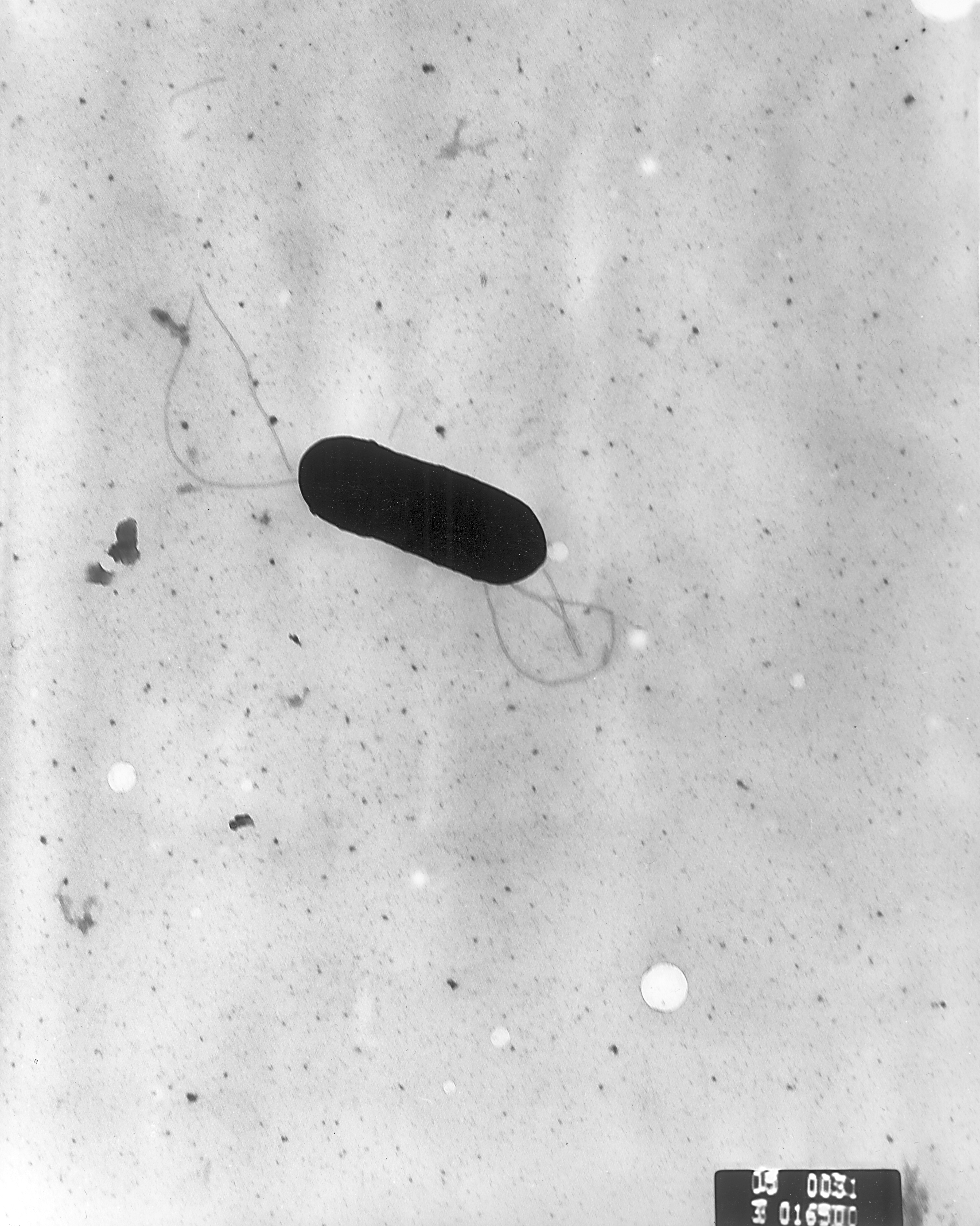
Usually associated with severe food poisoning, the bacteria Listeria monocytogenes (shown above) can also be used to infiltrate cells. The scientists had previously noted that a non-lethal, attenuated strain of the bacteria (Listeriaat) was quickly cleared from healthy cells but not from tumor cells. They therefore decided to use Listeriaat  to deliver a radioactive punch directly to cancer cells.

To test this technique, the researchers generated metastatic pancreatic tumors in mice. They infected the mice with Listeriaat  and found that the bacteria accumulated only within tumor cells. Critically, the Listeriaat  were found in metastases all over the body, not just at the site of the primary tumor. The scientists then used anti-Listeria antibodies to attach the radionuclide 188Rhenium (188Re) to the Listeriaat. 188Re was chosen for its short half-life (only 16.9 hours). Its attachment neither killed nor affected the infectivity of the bacteria, now called ‘radioactive Listeriaat’ (RL).


When cancerous mice were infected with RL, the number of their metastases decreased by 90%. Primary tumors also shrank by 64% after infection with RL. Most of the radioactivity within the mice was found in their metastases. There was no damage to normal tissues.

These data suggest that the bacteria are bringing their radioactive payloads directly to the cancerous cells. It is especially encouraging that the radioactivity is accumulating in and killing metastatic tumors throughout the body. These cells can be exceedingly difficult to identify, let alone remove or kill.

While these results are highly promising, one mouse study doth not a treatment make. Writing in Nature, Monya Baker has a list of critiques about the study, including the possibility that the technique will result in excessive levels of radiation throughout the body. We’ll have to see if further studies support the commencement of human clinical trials.

Quispe-Tintaya, W., Chandra, D., Jahangir, A., Harris, M., Casadevall, A., Dadachova, E., & Gravekamp, C. (2013). Nontoxic radioactive Listeriaat is a highly effective therapy against metastatic pancreatic cancer Proceedings of the National Academy of Sciences DOI: 10.1073/pnas.1211287110.


Friday, May 10, 2013

Gamma-ray burst solved


It’s been a while since I posted a fabulous NASA animation. To remedy that lapse, here’s a clip about a gamma-ray burst. But first, a bit of background information.

Like the name implies, gamma-ray bursts are sudden eruptions of gamma-rays. As you can see from the diagram below, gamma rays produce the highest energy radiation on the electromagnetic spectrum. When you get a giant burst of them, the result is the brightest explosion in the universe.


On December 25, 2010, one such event was captured by NASA’s Swift spacecraft. The question was, what had caused it? That puzzle may have been recently solved by Andrew Levan of the University of Warwick and his colleagues. I'll let them explain: