Feast your eyes on this beautiful slow motion footage of an owl, courtesy of the folks at Earth Unplugged.
Or, if you're not into vertebrates, how about a praying mantis attack?
Lots more slow motion animals plus answers to all kinds of science queries at the Earth Unplugged YouTube channel.
Wednesday, May 29, 2013


Tuesday, May 28, 2013
The ethics of DNA databases
Update 6/2013: The U.S. Supreme Court just ruled that DNA samples can be taken from people who are arrested but not yet convicted.
 Do you think the government should have your DNA or that of your loved ones on file? What if the information could help identify missing persons or human remains? And who should have access to the data? Considering that 100 million people will probably be part of a DNA database by the year 2015, these are not trivial questions.
For most people, providing DNA samples is strictly voluntary. It’s also important to note that at this time, DNA profiling is used only for the identification of individuals. Police and government departments cannot delve into our genomes for health or personal information. However, policies change and technology improves. Joyce Kim and Sara Katsanis from Duke University Medical Center suggest we get on the ball and figure out how we want to regulate DNA collection before it’s too late.
A few of their questions:
What do you guys think?
For more on this story, read Virginia Hughes' fascinating article at Only Human.
 Joyce Kim, & Sara H. Katsanis (2013). Brave New World of human-rights DNA collection Trends in Genetics.
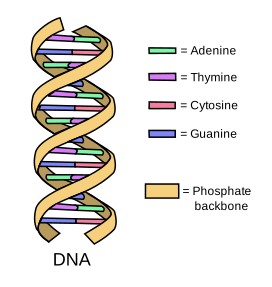 Do you think the government should have your DNA or that of your loved ones on file? What if the information could help identify missing persons or human remains? And who should have access to the data? Considering that 100 million people will probably be part of a DNA database by the year 2015, these are not trivial questions.
Currently, there are many circumstances in which a person’s DNA might find itself in a government database. Many countries routinely collect DNA from all military personnel. Petitioning refugees and immigrants might have their DNA compared to their alleged family sponsors. And of course, the DNA of criminals and victims is often collected.
There are also programs with databases set up to combat specific problems, like human trafficking. DNA-PROKIDS collects DNA in an effort to thwart the illegal transport and adoption of children out of their native countries.
- Should the DNA databases be held privately or publicly?
- Who should have access to the data and under what circumstances?
- What kind of information should agencies be allowed to glean from the data? In the not too distant future, it will be a simple matter to find out a person’s genetic risk for health or cognitive problems. We probably won’t want everyone to have that information.
- What provisions are there for either opting out or expunging one’s DNA from the records?
What do you guys think?
For more on this story, read Virginia Hughes' fascinating article at Only Human.
 Joyce Kim, & Sara H. Katsanis (2013). Brave New World of human-rights DNA collection Trends in Genetics.
Monday, May 27, 2013
Memorial Day
Happy Memorial Day everyone!
I'm taking a day off from writing science posts. However, I always have new stuff on the Stochastic Scientist Facebook page. If you like cool pictures, videos or science news, click the link to the left
 to head over and like the page.

On the other hand, if you want a Memorial Day post, may I suggest you head over to my other blog: Logical Outlook?
Friday, May 24, 2013
Providing the world with electricity
How much would it cost to provide every person on Earth with electricity and clean-combusting cooking fuels by the year 2030? According to a multinational team of researchers led by Shonali Pachauri of the International Institute for Applied Systems Analysis, Austria, about 75 billion U.S. dollars per year.
Not surprisingly, if the affluent parts of the world refuse to offer substantial assistance, the rest of world will not have electricity by 2030. In fact, without infrastructure assistance in the form of subsidized fuel prices, microloans and grants, there will be even more people without access to clean fuels in the future. On the other hand, an investment of about $75 billion per year could very well provide everyone on Earth with modern energy. Remember, that would be a global contribution, it wouldn't have to all come from one country.
Needless to say, this is an estimate. Even if the models are accurate, we can’t predict which if any policy changes are going to be implemented to push the U.N.’s agenda along.
By the way, contrary to first impression, giving more people access to modern energy should not increase carbon emissions. This is because petroleum products give off less carbon than wood or other traditional cooking fuels. Also, modern stoves and lighting apparatuses are more efficient than traditional cookstoves. And if newly built energy grids focus much more heavily on renewable resources like wind or solar, the gains will be that much greater.
Pachauri, S., van Ruijven, B., Nagai, Y., Riahi, K., van Vuuren, D., Brew-Hammond, A., & Nakicenovic, N. (2013). Pathways to achieve universal household access to modern energy by 2030 Environmental Research Letters, 8 (2) DOI: 10.1088/1748-9326/8/2/024015.
Currently, over 20% of the world’s population do not have electricity. You can imagine how much less productive a society is if it must cease most types of work or learning at sunset. The lack of clean cooking fuels is an even bigger problem. The time and energy spent collecting traditional fuels (wood or coal) drains local economies. Even worse, the smoke from these stoves is known to cause illness and premature death, particularly in children.

A traditional outdoor cookstove - a chulla - in rural Tamil Nadu fired, as you can see, by any readily available material, here branches pulled from the rapidly deforesting barren lands, some salvaged scrap wood, dried dung cakes and coconut shells.
Credit: McKay Savage 8/30/2012
Because of these issues, the United Nations has set the ‘International Year of Sustainable Energy for All’ goal of achieving universal access to modern energy by the year 2030. Using 2005 as a base year, the researchers created models with different scenarios of public support in order to calculate what sorts of investment and policy changes would be required to get to that goal. For example, in some cases, the energy changes have to be achieved without changing existing polices, in others, western countries come together to offer low-cost financing and grants.A traditional outdoor cookstove - a chulla - in rural Tamil Nadu fired, as you can see, by any readily available material, here branches pulled from the rapidly deforesting barren lands, some salvaged scrap wood, dried dung cakes and coconut shells.
Credit: McKay Savage 8/30/2012
Pachauri, S., van Ruijven, B., Nagai, Y., Riahi, K., van Vuuren, D., Brew-Hammond, A., & Nakicenovic, N. (2013). Pathways to achieve universal household access to modern energy by 2030 Environmental Research Letters, 8 (2) DOI: 10.1088/1748-9326/8/2/024015.Thursday, May 23, 2013
Genetic mosaicism may affect genome studies
There are so many things I love about this story, not the least of which is that the senior author on the paper is named Hudson Freeze. Kudos to his parents. More importantly, this study exposes a hitherto unsuspected problem with genomic studies. Not all the cells within a person contain the same genes.

Ng, B., Buckingham, K., Raymond, K., Kircher, M., Turner, E., He, M., Smith, J., Eroshkin, A., Szybowska, M., Losfeld, M., Chong, J., Kozenko, M., Li, C., Patterson, M., Gilbert, R., Nickerson, D., Shendure, J., Bamshad, M., & Freeze, H. (2013). Mosaicism of the UDP-Galactose Transporter SLC35A2 Causes a Congenital Disorder of Glycosylation The American Journal of Human Genetics, 92 (4), 632-636 DOI: 10.1016/j.ajhg.2013.03.012.
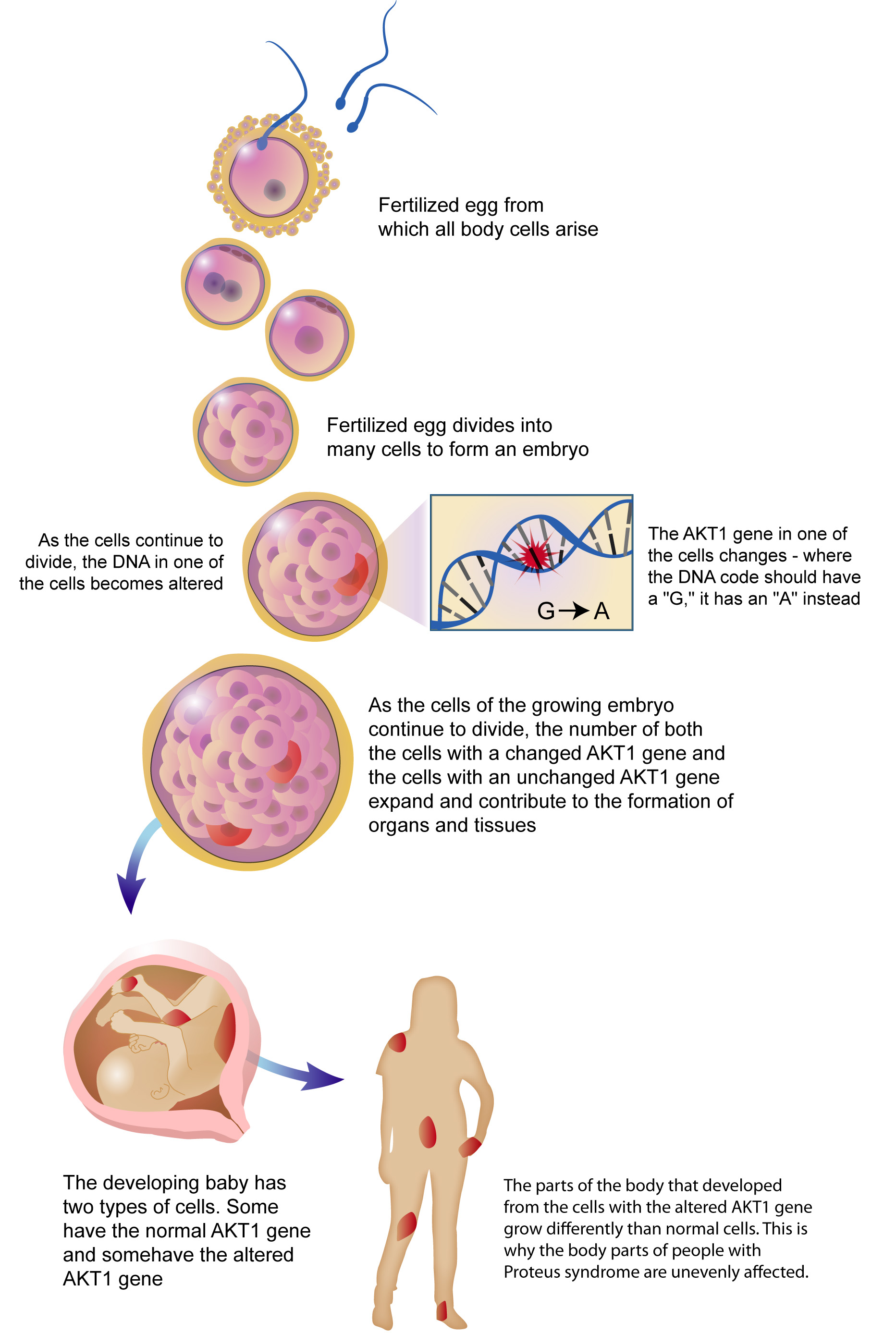
To be clear, it’s not the phenomenon of having cells of different genotype that’s novel. Scientists have known about the existence of genetic ‘mosaics’ for over eighty years. Occasionally when cells divide, DNA replication or chromosome division goes slightly awry and you end up with two daughter cells that are not genetically identical.
The drawing below illustrates mosaicism (don’t worry about the name of the specific gene or syndrome in the captions, they’re from a different article).
What is new is the realization that mosaicism may have to be taken into account when doing genomic studies. Case in point, three young children with glycoyslation disorders. Briefly, these kids have mutations that prevent their cells from attaching the right sugars in the right places to their proteins. Sugar placement is surprisingly critical for a whole host of functions, including cognitive ability.
Here’s the interesting part: only some of these kids’ cells contained the relevant mutation. This made it difficult to accurately diagnose them, because genetic studies came up negative or inconclusive. The scientists realized that they were dealing with mosaicism. That is, only a subset of the kids’ cells were defective.
Going forward, Freeze and his colleagues suggest that researchers be cautious about how much credence they pay to whole genome studies. Those studies obviously involve only a tiny fraction of a person’s cells and could possibly be misleading.
Going forward, Freeze and his colleagues suggest that researchers be cautious about how much credence they pay to whole genome studies. Those studies obviously involve only a tiny fraction of a person’s cells and could possibly be misleading.
By the way, this study dealt with ‘somatic mosaicism’. The children with this condition had originated from a single fertilized egg and some of their cells had subsequently mutated. This is a common enough occurrence that some researchers believe we may all be somatic mosaics. Under rare circumstances, two fertilized eggs will fuse into one embryo (the reverse of identical twinning) and the resulting baby will have some cells that are derived from each of those eggs.
Ng, B., Buckingham, K., Raymond, K., Kircher, M., Turner, E., He, M., Smith, J., Eroshkin, A., Szybowska, M., Losfeld, M., Chong, J., Kozenko, M., Li, C., Patterson, M., Gilbert, R., Nickerson, D., Shendure, J., Bamshad, M., & Freeze, H. (2013). Mosaicism of the UDP-Galactose Transporter SLC35A2 Causes a Congenital Disorder of Glycosylation The American Journal of Human Genetics, 92 (4), 632-636 DOI: 10.1016/j.ajhg.2013.03.012.Wednesday, May 22, 2013
Just for fun: 2013 Best Illusion of the Year
Once again, it's time for the Best Illusion of the Year contest, sponsored by the Vision Sciences Society.
The top prize went to this video, made by Jun Ono, Akiyasu Tomoeda and Kokichi Sugihara of Meiji University.
This illusion concerns apparent rotation generated by pure translation. Square patterns consisting of four segments appear to rotate when they move straightly at a constant speed across the grid background. More surprisingly, the rotations in opposite directions can be generated by exactly the same square patterns. This illusion might be explained by well-known inchworm illusion; inchworm illusion arises at the four segments one after another resulting in the impression of rotation. This illusion is new in the sense that the rotation is generated by pure
translation.
Full disclosure, it took me a bit of staring to see all the rotation patterns. You can judge for yourself.
I loved the second prize winner, by Arthur Shapiro and Alex Rose-Henig from American University, but unfortunately I could not embed it here. Check it out and be prepared to spend some time playing with it.
Finally, here's one I liked by Guy Wallis and David Lloyd from the University of Queensland.
You can see the other finalists here.
The top prize went to this video, made by Jun Ono, Akiyasu Tomoeda and Kokichi Sugihara of Meiji University.
This illusion concerns apparent rotation generated by pure translation. Square patterns consisting of four segments appear to rotate when they move straightly at a constant speed across the grid background. More surprisingly, the rotations in opposite directions can be generated by exactly the same square patterns. This illusion might be explained by well-known inchworm illusion; inchworm illusion arises at the four segments one after another resulting in the impression of rotation. This illusion is new in the sense that the rotation is generated by pure
translation.
Full disclosure, it took me a bit of staring to see all the rotation patterns. You can judge for yourself.
I loved the second prize winner, by Arthur Shapiro and Alex Rose-Henig from American University, but unfortunately I could not embed it here. Check it out and be prepared to spend some time playing with it.
Finally, here's one I liked by Guy Wallis and David Lloyd from the University of Queensland.
You can see the other finalists here.
Tuesday, May 21, 2013
Does antimatter fall or rise?
Mass can be explained in two ways: by the amount of force required to accelerate an object (inertial mass) and by that object’s attraction for other objects (gravitational mass). For ordinary matter, these two measurements are equal. What about for antimatter? While we can’t yet answer this question definitively, we now have the first observations of anti-atoms within a gravitational field.

Early experiments show that the gravitational mass of antihydrogen is not more than 100 times that of its inertial mass. Remember, these two numbers are equal for regular hydrogen and could also be equal for anti-hydrogen. At this stage, these initial experiments are not much more than proof-of-concept tests. However, the physicists are confident that they will crack this puzzle in the coming years.
Amole, C., Ashkezari, M., Baquero-Ruiz, M., Bertsche, W., Butler, E., Capra, A., Cesar, C., Charlton, M., Eriksson, S., Fajans, J., Friesen, T., Fujiwara, M., Gill, D., Gutierrez, A., Hangst, J., Hardy, W., Hayden, M., Isaac, C., Jonsell, S., Kurchaninov, L., Little, A., Madsen, N., McKenna, J., Menary, S., Napoli, S., Nolan, P., Olin, A., Pusa, P., Rasmussen, C., Robicheaux, F., Sarid, E., Silveira, D., So, C., Thompson, R., van der Werf, D., Wurtele, J., Zhmoginov, A., & Charman, A. (2013). Description and first application of a new technique to measure the gravitational mass of antihydrogen Nature Communications, 4 DOI: 10.1038/ncomms2787.
Where ordinary hydrogen is composed of one electron and one proton, antihydrogen is composed of a positron (anti-electron) and an anti-proton. Note that even though protons and positrons both have positive charges, they do not occupy the same roles. Despite their opposite charges, it’s the protons and antiprotons that have the same positions within their respective atoms. The same is true of positrons and electrons. So anti-atoms are just like regular atoms except with opposite charges. Oh, and there’s the fact that when anti-atoms meet normal atoms the two annihilate each other.
Physicists working with CERN’s ALPHA, an international collaboration with the purpose of studying antimatter, have succeeded in producing and capturing antihydrogen. The anti-atoms are trapped within the ALPHA apparatus until the scientists are ready to release them. Within a few milliseconds of this release, the anti-hydrogens annihilate against the regular matter wall of the trap. The position at which this annihilation occurs can then be detected. From this, the researchers can determine any gravitational effects.Amole, C., Ashkezari, M., Baquero-Ruiz, M., Bertsche, W., Butler, E., Capra, A., Cesar, C., Charlton, M., Eriksson, S., Fajans, J., Friesen, T., Fujiwara, M., Gill, D., Gutierrez, A., Hangst, J., Hardy, W., Hayden, M., Isaac, C., Jonsell, S., Kurchaninov, L., Little, A., Madsen, N., McKenna, J., Menary, S., Napoli, S., Nolan, P., Olin, A., Pusa, P., Rasmussen, C., Robicheaux, F., Sarid, E., Silveira, D., So, C., Thompson, R., van der Werf, D., Wurtele, J., Zhmoginov, A., & Charman, A. (2013). Description and first application of a new technique to measure the gravitational mass of antihydrogen Nature Communications, 4 DOI: 10.1038/ncomms2787.
Subscribe to:
Posts (Atom)