Science-- there's something for everyone

Tuesday, March 11, 2014

The ocean that might have been

You’re familiar with the Atlantic Ocean, but have you ever heard of the Saharan Atlantic Ocean? No? That’s because there is no Saharan Atlantic Ocean. But there might have been.

From 510 to 180 million years ago, South America and Africa were fused together in a supercontinent called Gondwana.
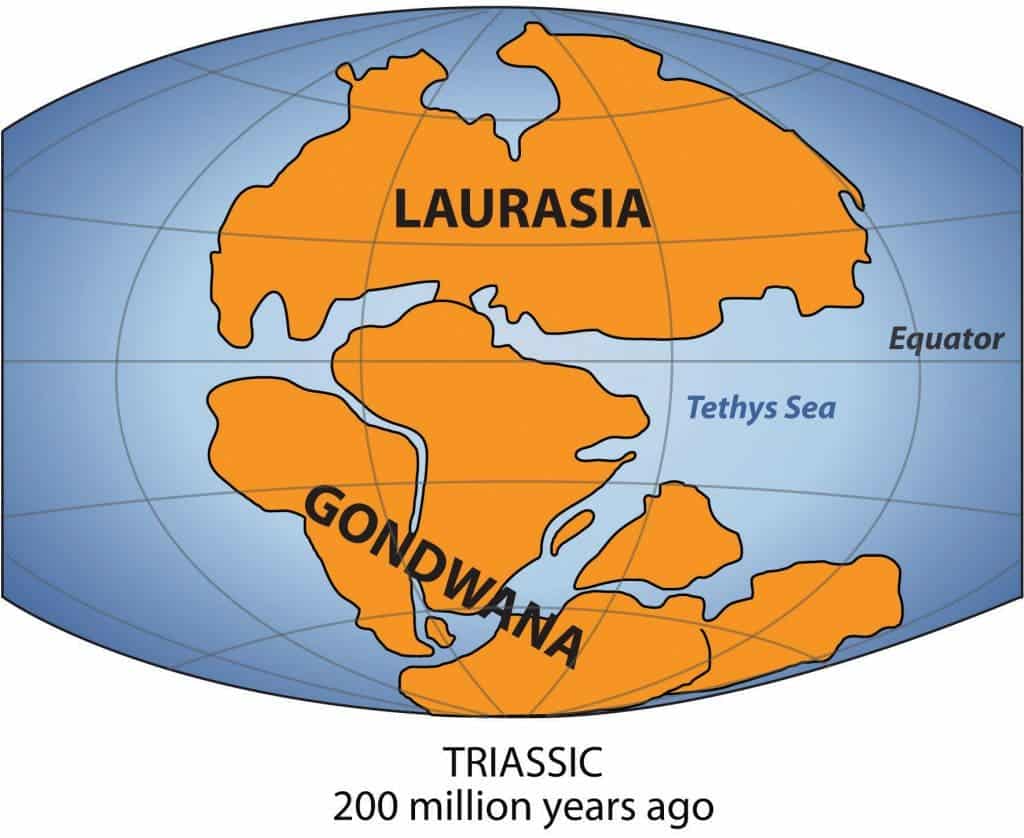


After that time, rifts in the Earth’s crust broke Gondwana apart, separating the Americas from Africa and resulting in the formation of the Atlantic Ocean. However, Christian Heine and Sascha Brune of the University of Sydney and the German Research Centre for Geosciences found that such an eventuality was far from certain. Instead, Africa itself could have split apart with the western half remaining attached to South America. You can see a model of what that might have looked like below.


A hypothetical model of the circum-Atlantic region at present-day, if Africa had split into two parts along the West African Rift system. Here, the north-west part of present day Africa would have moved with the South American continent, forming a "Saharan Atlantic ocean".
Credit: Sascha Brune/Christian Heine

For a while (some 20 million years), it looked like either scenario could have played out. Gondwana could have been split between Africa and South America or between Eastern and Western Africa.

Obviously, the former rift proved more powerful and the African rift was eventually abandoned. Thus we ended up with the Earth we have today.


Heine, C., & Brune, S. (2014). Oblique rifting of the Equatorial Atlantic: Why there is no Saharan Atlantic Ocean Geology, 42 (3), 211-214 DOI: 10.1130/G35082.1.


Monday, March 10, 2014

Rafting on a baby ant float

If your community was escaping from a flood by building a living raft, would you use babies as floatation devices? What if those babies turned out to be much more buoyant than adults? If you’re an ant of the species Formica selysi, that’s exactly what you would do.

University of Lausanne researchers led by Jessica Purcell tested the rafting strategies of F. selysi. To do so, they first had to address a few questions, like how long can a worker ant survive being submerged in water? And just how buoyant is an ant larva? These questions were handily answered by holding worker ants under water and by floating larvae in increasing concentrations of detergent. Fun for everyone.

Next, the scientists encouraged colonies of ants to build rafts by slowly flooding the platform they were living on. The ant rafts are built solely of ant bodies, they used no other construction materials. As the rafts were constructed, the researchers observed their building strategies.


If there were larvae or pupae (brood) available, the workers would put them in a pile and climb on top. If present, the queen would then take a lofty position on top of the workers and float away in relative ease and safety. 


You can observe this in the following video, which is shot from underneath. Note how pillowy and comfortable the large yellow ant brood looks.


As odd as it seems to our sensibilities, floating away on a pile of babies gives everyone a higher chance of success. Worker ants have a 79% survival rate after being submerged for eight hours, but ant brood fare even better. In addition, ant larvae and pupae are significantly more buoyant than the adult workers. Putting the brood on the bottom means that the adults stay drier and have subsequently shorter post-rafting recovery times, which could be crucial if the colony has to quickly establish a beachhead at the new location.


For your viewing pleasure: an unsinkable raft of fire ants, which employ a similar raft building strategy. And you thought magnets were fun to play with.  


Purcell, J., Avril, A., Jaffuel, G., Bates, S., & Chapuisat, M. (2014). Ant Brood Function as Life Preservers during Floods PLoS ONE, 9 (2) DOI: 10.1371/journal.pone.0089211.


Friday, March 7, 2014

Bad news about water usage


An average person could fulfill all her indoor water needs (drinking, food preparation, sanitation and hygiene) with about thirteen gallons per day. In the U.S., we don’t believe in being average however. In 2005, we each used about 98 gallons per day. As climate change reworks the planetary precipitation levels, that could prove to be a big problem. Unfortunately, most people have little idea of how to solve that problem.

Shahzeen Attari from Indiana University asked 1000 people two questions in random order: What’s the most effective thing you can do to reduce your own water consumption; and what’s the most effective thing other Americans can do.

The responses were divided into two categories: curtailment (take shorter showers, eat less meat) or efficiency (switch to water-saving appliances). Most people chose curtailment options for themselves and others by a seven to one ratio. Yet, the single most effective thing a person can do to conserve water is to retrofit an older toilet. Sure, turning the water off while you brush your teeth is good, but replacing an aged clothes washing machine with a newer, much more efficient model would make a much bigger difference.

People were also terrible at estimating how much water different activities used, which no doubt plays into their inability to make the smartest conservation choices. Of course, it’s also true that, while you might save money in the long run, changing out your appliances can be pretty expensive. Meanwhile, taking shorter showers doesn’t cost anything.


Attari, S. (2014). Perceptions of water use Proceedings of the National Academy of Sciences DOI: 10.1073/pnas.1316402111.


Thursday, March 6, 2014

Revenge of the Crazy Ants

This is a fire ant (Solenopsis invicta). 

Solenopsis invicta
www.AntWeb.org

Although it originated in South America, there’s a good chance you are more familiar with it than you want to be. Fire ants are now pests throughout much of the world. Among their charms is an extremely painful venom and a willingness to attack.

If you live in the southern United States, you may be pleased to hear that fire ants have met their match in another invader from South America, the crazy ant (Nylanderia fulva). 


Nylanderia fulva
Photographed by April Nobile, 6/8/07
www.AntWeb.org
Fire ants easily dispatch most other ant species from their territories, but the crazy ants are not only holding their own, they’re actually displacing the fire ants. How?

Edward LeBrun, Nathan Jones and Lawrence Gilbert of The University of Texas at Austin found that the crazy ants can detoxify the venom of the fire ants, rendering the latter weaponless in the ensuing battle. The crazy ants do this by daubing themselves with their own abdominal secretions.


Crazy ants that were permitted to detoxify the fire ant venom had a 98% survival rate. That rate dropped in half when the crazy ants' own venom glands were sealed, preventing them from applying the antidote. With the arrival of crazy ants, it looks like fire ants' days may be numbered.

The news isn't all good. While crazy ants are likely to spread more slowly than fire ants did, they will eventually cause many of the same problems, devastating native populations of insects, and, in turn, the animals that depend on those insects.

You can read more about this here. 


Lebrun EG, Jones NT, & Gilbert LE (2014). Chemical Warfare Among Invaders: A Detoxification Interaction Facilitates an Ant Invasion. Science (New York, N.Y.) PMID: 24526314.

Wednesday, March 5, 2014

Just for fun: Science demos!

Get Set Demonstrate is a Youtube channel for science teachers. Or anyone who likes to set up experiments and see cool results.

Below are step by step instructions for making a 'pearls of water' demonstration using standard high school lab equipment.


Just remember not to put your students into epileptic fits.

Tuesday, March 4, 2014

Wallabies don't see like quokkas

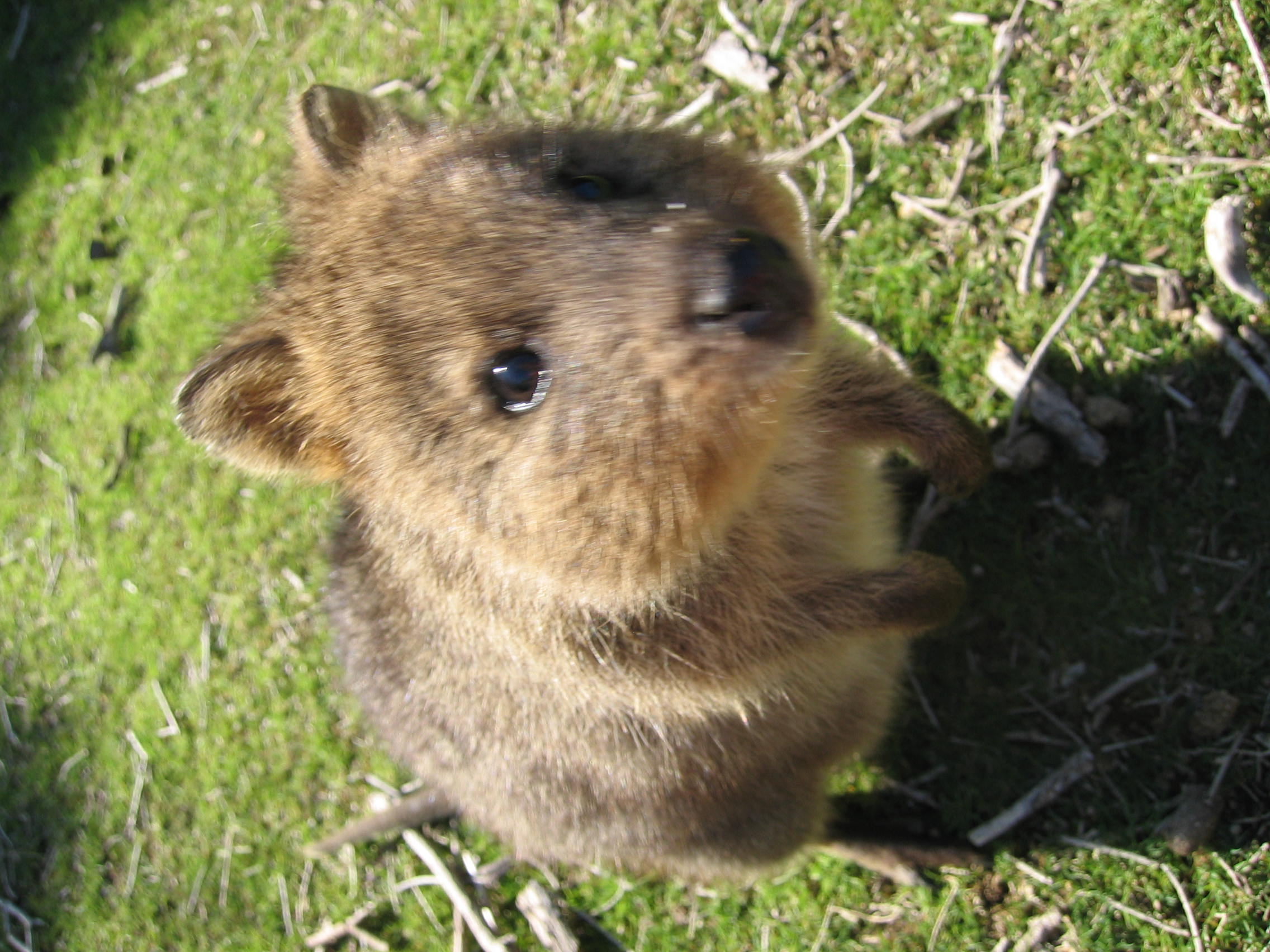
Wiebke Ebeling from Curtin University and Jan Hemmi from The University of Western Australia have discovered that the color vision of wallabies is more similar to that of dogs than of quokkas. If you’re like me, the first thing you thought upon reading that sentence was, ‘what the hell is a quokka?’

Here it is:


File:Quokka.jpg
Quokka, photographed by Loetifuss, 9/23/2005

I know, I know. So cute!


The important point is that like wallabies, quokkas are marsupials. This means that wallabies are much more closely related to quokkas than they are to placental mammals, like dogs. However most placental mammals (except for some primates) have only two types of cones and thus have limited color vision (they're dichromates). In contrast, many marsupials, including quokkas, are trichromatic, having three types of cones. Yet, the closely related wallaby is a dichromate.

How do we know? Well, by training the critters to indicate whether two light panels appeared to be the same color.


thumbnail
Light stimuli were projected onto diffuser flaps that also served as the trigger when the animal pushed to indicate a stimulus choice. If correct, a food reward was delivered into a feeder bowl under the stimuli.
Photo copyright: W. Ebeling.
doi:10.1371/journal.pone.0086531.g001

It’s pretty clear that the wallabies are dichromatic. What’s not clear is why they differ in this fundamental way from other, closely related marsupials. 


Wiebke Ebeling, & Jan M. Hemmi (2014). Dichromatic Colour Vision in Wallabies as Characterised by Three Behavioural Paradigms PLOS ONE DOI: 10.1371/journal.pone.0086531.


Monday, March 3, 2014

Gripping without fingers

Researchers from the University of Chicago, Cornell and iRobot have designed a new robotic gripper that you are definitely going to want to play with. 

http://creativemachines.cornell.edu/sites/default/files/cornell4.jpg
Credit: John Amend, Cornell University

You’ll notice something striking about this particular robotic arm. Unlike other models, this design has no fingers or claw. In fact, it’s just a bag. Yet, it can somehow grip any kind of object. How?

The bag is filled with small grains. For their prototype, the authors used a balloon filled with coffee grounds. The bag is then attached to a vacuum. When that vacuum is turned off, the coffee grounds are packed loosely enough to mold around objects. Then, when the vacuum is turned on, the air is evacuated from the balloon leaving the coffee grounds rigidly compressed in place around the gripped object.

You can see a demonstration below:


Didn’t I tell you you were going to want one? Well, the good news is that you can make your own universal gripper! Here’s one tutorial:


Eric Brown, Nicholas Rodenberg, John Amend, Annan Mozeika, Erik Steltz, Mitchell R. Zakin, Hod Lipson, & Heinrich M. Jaeger (2010). Universal Robotic Gripper based on the Jamming of Granular Material Proceedings of the National Academy of Sciences 107, (44) 18809-18814 (2010) arXiv: 1009.4444v2.