Science-- there's something for everyone

Monday, March 7, 2011

A new way to study aging

Researchers from the Salk Institute are using induced pluripotent stem cells (IPS cells) to study aging. The cells were induced from patients suffering from Hutchinson-Gilford Progeria Syndrome, an extremely rare (1 in 8 million) genetic disorder that causes premature aging.

This is a 4-year-old boy with Hutchinson-Gilford Progeria Syndrome.

Photo: Courtesy of The Progeria Research Foundation

Normal human aging is difficult to study because the lifespan of the average researcher is the same as that of the average patient. No one scientist could follow a group of people from birth to old age. Unless, that is, the people are unfortunate enough to suffer from Progeria, in which case they exhibit the symptoms of accelerated aging and are unlikely to live past the age of 13. Progeria is caused by a single base pair change (point mutation) in the lamin A gene, which results in a defect in their cells' nuclear structure.

The Salk researchers, led by Juan Carlos Izpisúa Belmonte, used cells from Progeria patients to create IPS cells. Since lamin A is not expressed in embryonic stem cells, the transformed IPS cells lacked the hallmarks of the disease. They appeared completely normal and acted like healthy cells. However, when these Progeria IPS cells were allowed to differentiate into smooth muscle cells, the symptoms of Progeria reappeared.

When the Progeria IPS cells were first genetically modified to prevent the expression of lamin A and then allowed to differentiate, the resultant muscle cells did not show signs of premature aging. This means that the researchers could not only use Progeria cells to watch the aging process unfold more rapidly, but they could also control whether or not the cells experienced rapid aging. Besides being a model for normal aging, the Salk scientists hope this study will lead to a potential treatment for Progeria.


Sunday, March 6, 2011

Reoviruses vs. cancer

Today, cancer is being fought in many ways, including using viruses. For example, reoviruses, RNA viruses that can cause mild gastrointestinal illness, are known to kill cancer cells. Alan Melcher from the University of Leeds and his colleagues have found that the secreted products of reovirus infections can kill cancer cells even in the absence of the virus itself.

When reoviruses infect a cell, they induce that cell to secrete chemicals that both cause its own death and initiate the body’s immune response against that cell. Normal cells can protect themselves from this onslaught by secreting their own protective protein called PKR. However, many types of cancer cells inactivate PKR, leaving them vulnerable to reovirus attack.

In this study, the researchers took the growth media from dying reovirus-infected human melanoma cells and administered that extract to new tumor cells. Even in the absence of live virus, immune cells were recruited to attack the cancer cells.

Although this line of attack is only in the preliminary stages, I wonder if eventually doctors will be able to brew up great vats of cancer-fighting reovirus media.

Saturday, March 5, 2011

Monitoring Killer Mice from Space

When I found the above title, I thought I'd be reading about a plague of deadly space mice and our efforts to keep track of them. No such luck. The story is actually about linking the satellite imagery of plant growth with the risk of contracting rodent-borne illness. After getting over my initial disappointment, I realized that the real study was interesting in its own right.

Denise Dearing and her colleagues from the University of Utah used the Moderate Resolution Imaging Spectroradiometer (MODIS) sensor on NASA's Terra satellite to generate satellite images of the plant life in Utah. Between 2003 and 2006, changes in vegetation were measured. Over an overlapping period of nine years, the researchers conducted twice yearly (spring and fall) trappings of deer mice, determining both the total number of mice and the percentage infected with hantavirus, a deadly pathogen. Hantavirus is acquired by breathing in the dried urine or feces of infected deer mice, and kills about half the people who contract it.

The scientists found that the amount of vegetation visible in the satellite images correlated very well with the total number of deer mice in an area. As the percentage of hantavirus-infected mice did not vary, more total mice meant proportionately more infected mice. Thus, the scientists were able to predict when people would be most at risk for encountering the disease.

The researchers suggest that this method could be used to create risk maps for other rodent-borne diseases. That would be pretty cool, but maybe not as cool as killer mice from space. Oh well.


Friday, March 4, 2011

Just for fun: NASA image of the day

Did you know that NASA posts an 'Image of the Day' on their website? This recent example is a view of Venus.


 Venus Rising


This composite image of Venus was processed to improve contrast and to emphasize small features, and was color-coded to represent elevation. Images were from the Magellan and Venera spacecraft and the Earth-based Arecibo radar observatory.
Image Credit: NASA/JPL/USGS

Thursday, March 3, 2011

The strange life of neurons

Research by Mark Sheffield, a graduate student of Nelson Spruston (Northwestern University), changes a lot of what we thought we knew about neurons. Among other hitherto unknown properties, neurons can send signals from the axon back to the cell body.

A typical nerve cell has a cell body or ‘soma’ surrounded by dendrites, and an axon that, in humans, can be more than a meter long. Signals are received by the dendrites, passed through the soma and then through the axon, from whence they are transmitted to the next cell’s dendrites. Signals are propagated by extremely fast changes in the ion content of the cells. Special pores along the cell membrane called ‘voltage-gated ion channels’ let specific ions in or out at a prodigious speed, creating an electric impulse that travels through the cell. Each gate is open for milliseconds or less as the signal is passed forward.


That pattern still holds true, but Sheffield and his colleagues have found that this isn’t the only story. In some cases, signals can go back up the line from the axon to the soma. This is actually an amazing finding, given that the ion channels were thought to open and then shut in only one direction along the length of the axon.

Even stranger, the researchers found that axons could fire even when no signal originated from either the dendrites or the soma. And finally, what surprised the scientists the most was that one axon could stimulate another axon without having sent a signal through either dendrites or soma.

The signals sent either back to the soma or straight to another axon were thousands of times slower than the typical axon-dendrite-soma-axon signal processing. The researchers suggest that nerve cells may be using these different types of signal conduction for different purposes.


Wednesday, March 2, 2011

Why do people give false confessions?

People will sometimes confess to crimes they did not commit. We know this in part thanks to The Innocence Project, which has used DNA evidence to exonerate almost 300 people, many of whom confessed to crimes they couldn’t have committed. Why would anyone confess in this manner? According to research by Stephanie Madon and her colleagues from Iowa State University, people confess to avoid short term (proximal) consequences at the expense of greater long term (distal) consequences.

The researchers gave 81 undergraduate volunteers a questionnaire about their past criminal and/or unethical behaviors. Depending on their answers, they would have to complete a grueling list of repetitive questions and/or meet with a police officer. In one experiment, they would have to answer the questions first, and meet with the police officer weeks later. In the second experiment, the follow up events were reversed.

In both cases, participants tried to avoid the proximal consequences and disregarded the distal repercussions. In other words, the subjects were saying, “OK fine, I did it. Can I go now?” even though they knew this would lead to trouble in a few weeks.

The authors hypothesize that innocent people may be so sure that ‘the truth will out’ that they don’t worry about making false confessions. They may feel that this strategy gets them out of the interrogation room more quickly, and that the true perpetrators will be caught before any real harm is done.


Tuesday, March 1, 2011

Asthma may be due to bacterial colonization

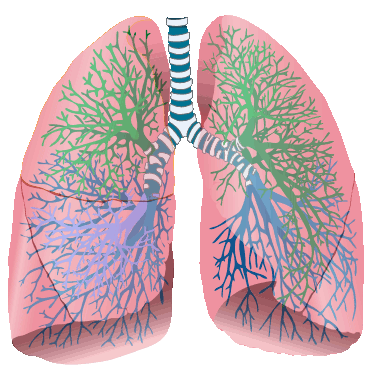
Asthma has long been assumed to be purely an allergic reaction. However, it turns out that bacterial infection may play an important role as well. Yvonne Huang of the University of California, San Francisco and her colleagues have found much richer and more diverse bacterial colonization in the airways of asthmatics, as opposed to healthy people.

The researchers assayed the bronchial tracts of 65 asthmatics and 10 healthy controls to look for numbers and types of bacteria. They used a tool that detects 16S ribosomal RNA (molecules that are present in all bacterial, but not human cells) to assess total numbers, and a DNA database of 8500 specimens to pick out specific species. The asthmatics not only had more total bacteria living in their respiratory tracts, but they had a much greater variety of types of bacteria.

This is interesting for two reasons. First, contrary to previous thought, our tracheas are not sterile, even in healthy people. We all have some microbiotica living in our airways. Second, and more importantly, this opens up new treatment possibilities for asthmatics. It will be interesting to see whether decreasing either the total number of bacteria or the diversity of species could alleviate symptoms.