And this:
For those who prefer a written explanation of why we only ever see one face of the moon, here's one.
Of course, thanks to satellite missions, we have now seen the 'dark' side of the moon. Behold!

 |
| Credit: © Melking / Fotolia. |
 |
| Current Biology : CB, 23 (24) DOI: 10.1016/j.cub.2013.10.071. |
 Jordy Kaufman, Joanne C. Tarasuik, Leila Dafner, Judy Russell, Sandra Marshall, & Denny Meyer (2013). Parental misperception of youngest child size Current Biology : CB, 23 (24) DOI: 10.1016/j.cub.2013.10.071.
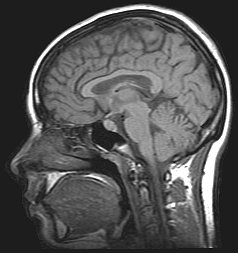 Sharon H, Pasternak Y, Ben Simon E, Gruberger M, Giladi N, Krimchanski BZ, Hassin D, & Hendler T (2013). Emotional processing of personally familiar faces in the vegetative state. PloS one, 8 (9) PMID: 24086365.
 |
| Mugger crocodile (Crocodylus palustris) at Madras Crocodile Bank, Tamil Nadu, India, with sticks on its head. Photo by Vladinir Dinets, from Dinets et al. (2013). |
 |
| American alligator successfully catches Snowy egret (Egretta thula) following stick-displaying behaviour. Photo by Don Specht, from Dinets et al. (2013). |
V. Dinets, J.C. Brueggen, & J.D. Brueggen (2013). Crocodilians use tools for hunting Ethology, Ecology & Evolution DOI: 10.1080/03949370.2013.858276. |
a) Bombyx mori larvae feeding on mulberry leaves sprayed with Direct Acid Fast Red
b) Silkworm larvae spinning coccoons
c) colored cocoons
d) Direct Acid Fast Red threads after degumming.
ACS Sustainable Chemistry & Engineering DOI: 10.1021/sc400355k. |
Anuya Nisal, Kanika Trivedy, Hasan Mohammad, Suyana Panneri, Sayam Sen Gupta, Ashish Lele, Ramesh Manchala, Nirmal S. Kumar, Mugdha Gadgil, Harish Khandelwal, Snehal More, & R. Seeta Laxman (2013). Uptake of Azo Dyes into Silk Glands for Production of Colored Silk Cocoons Using a Green Feeding Approach ACS Sustainable Chemistry & Engineering DOI: 10.1021/sc400355k. |
| a) Image of a sensor array after application to the skin.b) Similar device, deformed by pinching the skin in a twisting motion. c) Magnified image of a related device under tensile strain. d) Infrared image of a sensor array mounted on the wrist at a location near the ulnar artery. e) Image of an Si nanomembrane diode sensor array mounted on the skin. f) Similar device as deformed by pinching the skin in a twisting motion. g) Image of a sensor array showing the ability of water to pass through readily. Inset: magnified image of a single sensor. h) Infrared image of an array on the human wrist while heating the four inner-most elements.Nature materials, 12 (10), 938-44 PMID: 24037122. |
Webb RC, Bonifas AP, Behnaz A, Zhang Y, Yu KJ, Cheng H, Shi M, Bian Z, Liu Z, Kim YS, Yeo WH, Park JS, Song J, Li Y, Huang Y, Gorbach AM, & Rogers JA (2013). Ultrathin conformal devices for precise and continuous thermal characterization of human skin. Nature materials, 12 (10), 938-44 PMID: 24037122.
